
In this article
How Is Artificial Intelligence Changing the Job Market?
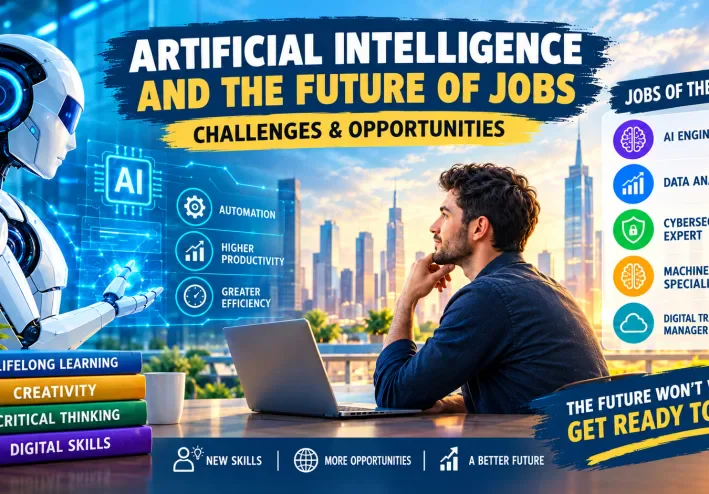
AI is changing how businesses operate by automating repetitive tasks, analyzing large amounts of data, and helping employees make faster decisions.
Companies can use AI to improve productivity, reduce operating costs, and deliver better customer experiences. For example, businesses can automate routine administrative work, while healthcare professionals can use AI tools to help analyze medical information.
However, these changes also mean that workers may need to learn new skills. In the future, understanding how to work effectively with AI could become an important advantage in almost every industry.
Learn more:OECD: AI and the Future of Work
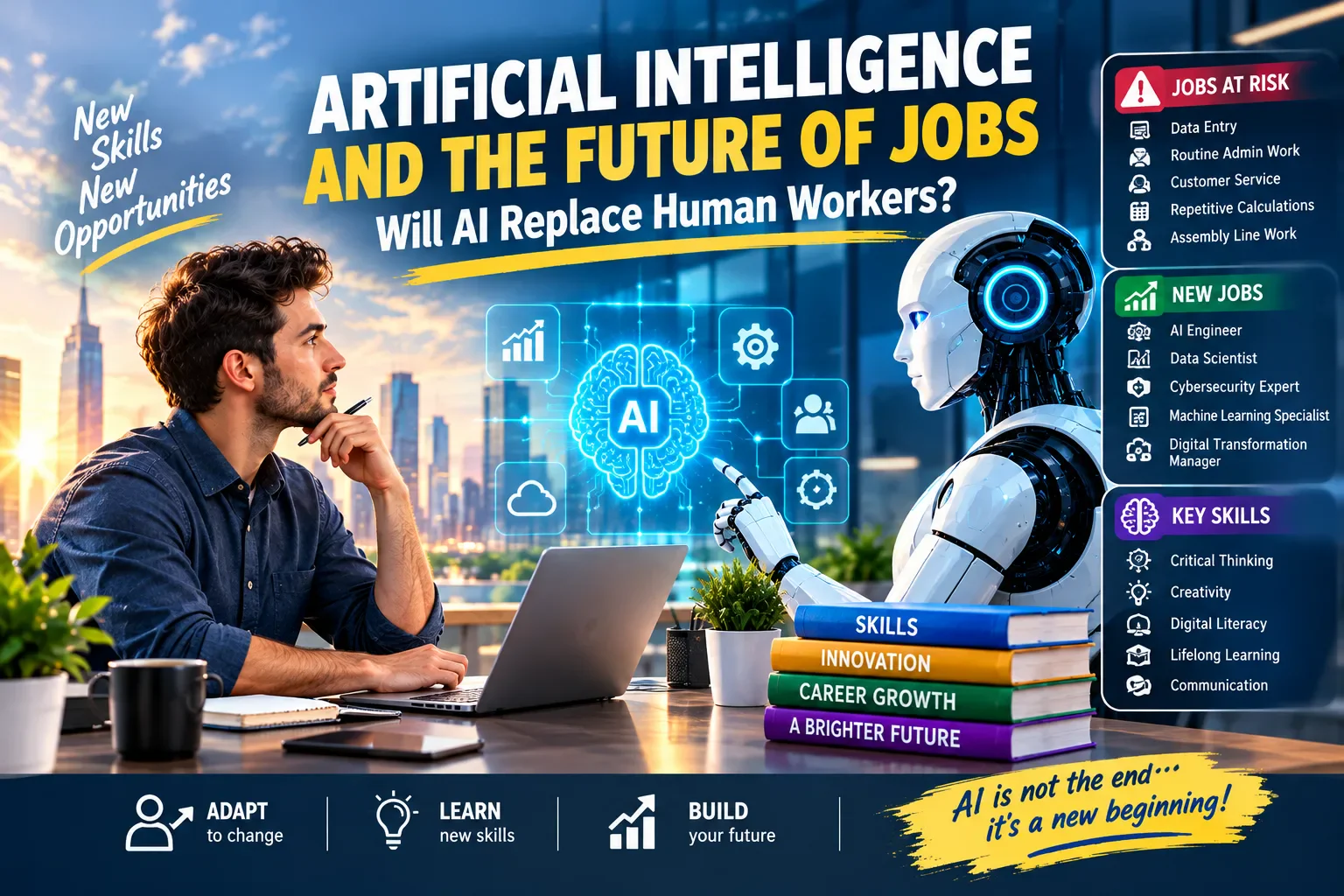
Jobs involving predictable, repetitive tasks are generally more exposed to automation. Some examples include:
- Data entry and basic record management.
- Routine administrative and clerical work.
- Certain customer service and call center tasks.
- Basic bookkeeping and repetitive calculations.
- Some manufacturing and assembly line tasks.
However, being exposed to AI does not necessarily mean a job will disappear. In many cases, AI will automate only certain responsibilities, allowing employees to focus on more complex tasks that require judgment, communication, and problem-solving.
The biggest challenge for many workers may be adapting to changing job responsibilities rather than competing directly with machines.
What New Jobs Will AI Create?
Although AI may reduce demand for certain tasks, it is also creating opportunities in technology and other industries.
Some careers expected to remain important as AI adoption grows include:
- Artificial intelligence engineers.
- Machine learning specialists.
- Data analysts and data scientists.
- Cybersecurity professionals.
- AI software developers.
- Digital transformation managers.
- AI ethics and governance specialists.
AI may also create opportunities in education, healthcare, marketing, and business management as organizations look for people who can combine industry knowledge with AI tools.
According to the World Economic Forum's Future of Jobs Report 2025, technological change is expected to reshape employment significantly, increasing demand for many technology-related roles while changing other occupations.
Read the report:World Economic Forum — Future of Jobs Report 2025
Essential Skills for the Future of Work
Technical knowledge will be valuable, but human skills will remain important in an increasingly automated workplace.
1. Critical Thinking and Problem-Solving
Workers who can evaluate information, identify problems, and make sound decisions will continue to offer value that goes beyond simply following automated processes.
2. Creativity and Innovation
AI can generate ideas and content, but people are still essential for setting meaningful goals, understanding cultural context, and making creative decisions that reflect human needs.
3. Continuous Learning
Technology changes rapidly. Taking online courses, earning professional certifications, and practicing new skills can help workers remain competitive.
4. Digital and AI Literacy
Knowing how to use AI tools responsibly, evaluate their results, and recognize their limitations can help employees work more efficiently across different industries.
5. Communication and Emotional Intelligence
Leadership, teamwork, empathy, and the ability to build relationships are especially important in roles involving customers, colleagues, patients, and students.
Is Artificial Intelligence a Threat or an Opportunity?
AI presents both challenges and opportunities. Some workers may face job displacement, changing responsibilities, or the need to retrain. At the same time, businesses may develop new products, expand their services, and create roles that did not previously exist.
The outcome will depend on how employers, governments, educational institutions, and workers respond to these changes. Access to training and opportunities to develop new skills will be particularly important.
Rather than assuming that AI will replace every human worker, it is more useful to understand how AI can change specific tasks and how people can adapt.
Conclusion
Artificial intelligence will have a lasting impact on the future of work, but it does not necessarily mean the end of human employment. Some occupations will shrink, others will evolve, and new careers will emerge.
The best way to prepare is to develop a combination of digital literacy, critical thinking, creativity, communication, and lifelong learning. Workers who learn to use AI as a tool rather than view it only as a competitor may be better positioned to take advantage of the opportunities ahead.
The future of work will not be determined by technology alone. It will also depend on how people choose to use it.
Keep up with احمد محمد
Choose site notifications, email, or both. Guests can subscribe by email without an account.
Report this article
Tell our review team about a problem with this content. Your details will not be shown to the author or other readers.
Your report could not be sent. Please try again later.
Sign in to report an article



Discussion
comments (0)
Share a perspective. Start a thoughtful conversation.
please login to be able to comment