


In this article
Brain Rot: What Is It, What Causes It, and How Can You Overcome It?
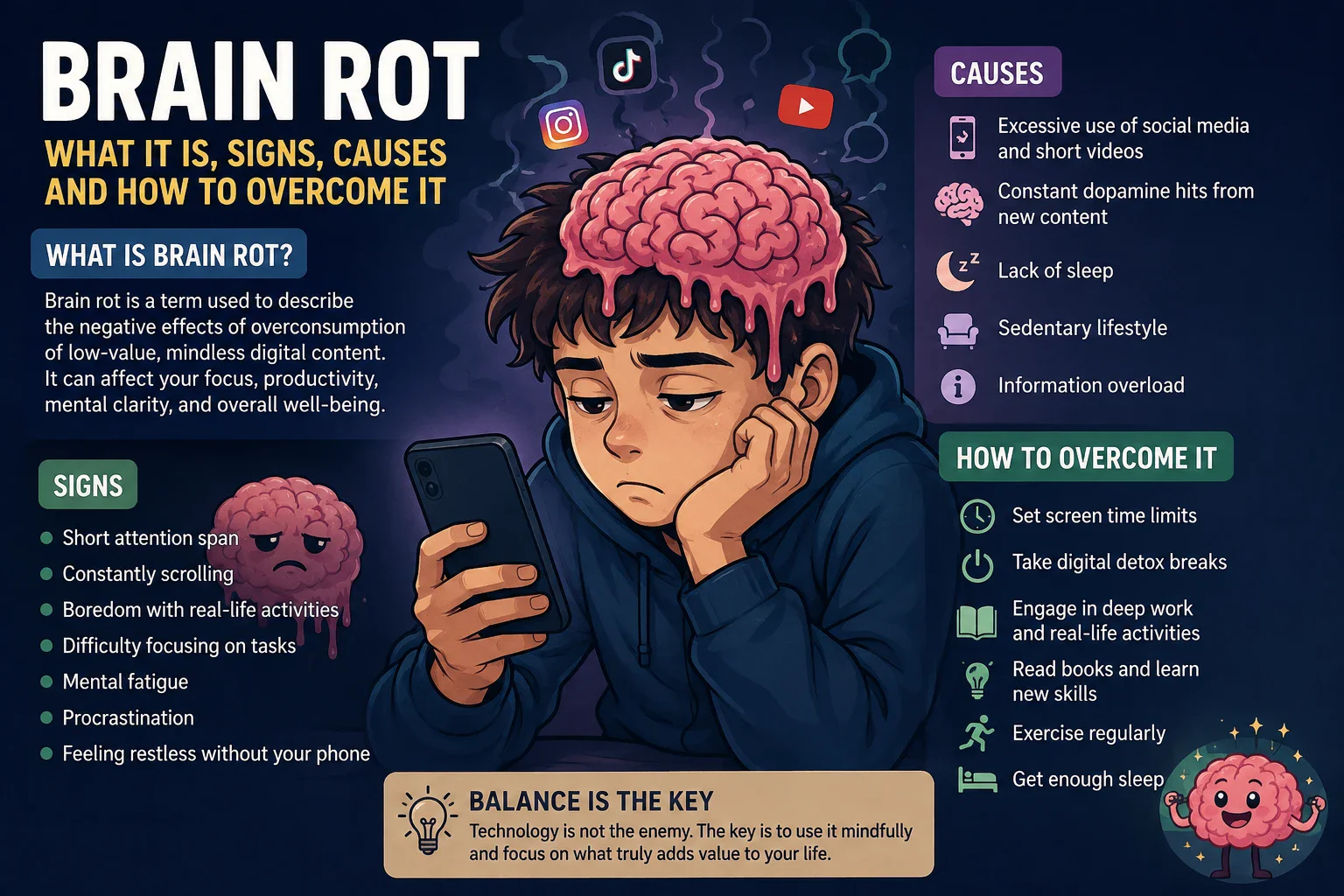
Have you ever found yourself scrolling through short videos for hours, but struggled to focus on studying, reading, or completing an important task? You may have heard the term “Brain Rot” on social media. But what does it actually mean? Is brain rot a real medical condition, and how can excessive digital content affect your daily life?
What Is Brain Rot?
Brain Rot is a popular term used to describe the perceived negative effects of excessive consumption of low-value or fast-paced digital content. It is not an official medical diagnosis or a recognized disease. Instead, the term is commonly used when people experience difficulty focusing, boredom with slower activities, or a strong habit of constantly checking their phones and social media.
The expression became especially popular with the growth of short-form content on platforms such as TikTok, Instagram Reels, and YouTube Shorts.
What Are the Signs of Brain Rot?
Although Brain Rot is not a medical condition, excessive screen time and constant consumption of short-form content may be associated with habits that affect concentration and productivity.
Some common signs include:
- Difficulty concentrating on one task for a long time.
- Getting bored quickly while reading or studying.
- Constantly switching between apps and videos.
- Spending more time on social media than intended.
- Finding long tasks less enjoyable or more difficult.
- Checking your phone repeatedly without a specific reason.
These signs do not necessarily mean that someone has a health problem. Lack of sleep, stress, anxiety, and other factors can also affect concentration and attention.
How Can Short Videos Affect Your Attention?
Short-form videos are designed to deliver new information or entertainment within seconds. Users can quickly move from one video to another, which creates a highly stimulating browsing experience.
When someone spends a large part of the day consuming this type of content, activities that require sustained attention, such as studying, reading books, or working on a difficult project, may feel less exciting by comparison.
This does not mean that short videos are automatically harmful. The main issue is excessive and uncontrolled use. Social media can be entertaining and useful when it is used in moderation.
How to Overcome Brain Rot
If you feel that your phone is taking too much of your time, you can start with a few simple changes. First, set a daily limit for social media and avoid opening apps whenever you feel bored.
Turning off unnecessary notifications can also reduce the temptation to check your phone constantly. Try keeping your phone away while studying, working, eating, or before going to sleep.
Another useful approach is to replace some screen time with activities that require deeper concentration. Reading, exercising, learning a new skill, spending time with friends and family, or practicing a hobby can help create a healthier balance.
You do not need to delete every social media application. Instead, focus on controlling your habits and making technology work for you rather than allowing it to control your time.
Final Thoughts
Brain Rot is not a medical disease, but the term highlights a real concern about excessive digital consumption and unhealthy screen habits. Constantly watching short-form content can make it harder for some people to focus on slower and more demanding activities.
By reducing unnecessary scrolling, setting healthy screen-time limits, getting enough sleep, and spending more time on meaningful activities, you can develop better digital habits and improve your ability to focus on what really matters.
Keep up with Marwa Gamal
Choose site notifications, email, or both. Guests can subscribe by email without an account.
Report this article
Tell our review team about a problem with this content. Your details will not be shown to the author or other readers.
Your report could not be sent. Please try again later.
Sign in to report an article







Discussion
comments (0)
Share a perspective. Start a thoughtful conversation.
please login to be able to comment