

في هذا المقال
Every night you close your eyes and fall asleep, and after a while your brain starts showing movies: strange dreams, sometimes logical, often absurd. Add up all the time we spend dreaming and it amounts to years of our lives. So why does your brain do this? It is one of the biggest open questions in science, but modern research has strong answers.
Your brain does not sleep like you do
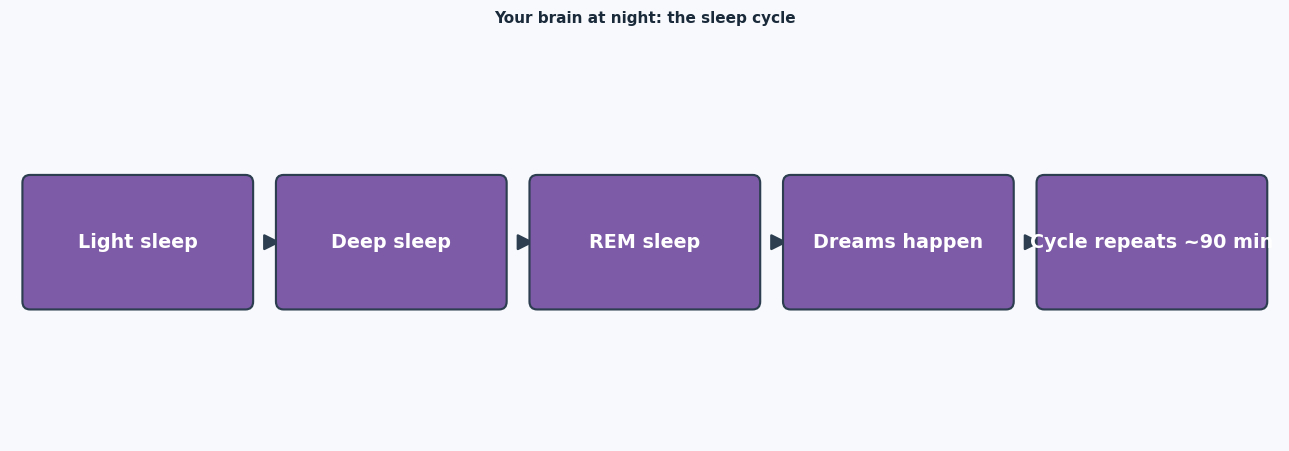
First fact: the brain has no off switch. In fact, during some sleep stages it is extremely active, sometimes more than when you are awake. Sleep is divided into cycles of about ninety minutes each, passing through light sleep, deep sleep, and then a stage called REM, short for rapid eye movement. During REM, your eyes move quickly under your eyelids, your brain reaches peak activity, and that is when vivid dreams happen.
Your body does something clever in this stage: it temporarily paralyzes your muscles so you do not act out your dreams. Your brain can dream of running while your legs stay still.
The brain sorts memories at night
The strongest scientific theory about dreaming is memory processing. Throughout the day your brain collects a huge amount of information, events and emotions. At night, especially during REM sleep, the brain sorts the harvest: deciding what gets stored in long-term memory, what gets deleted, and how new information connects to old knowledge.
That is why sleeping well before an exam helps more than staying up late, and why you dream repeatedly about whatever is stressing you: your brain is trying to process it.
Why dreams are so weird
Why are dreams illogical? Because the part of the brain responsible for logic and judgment, the prefrontal cortex, calms down during REM sleep, while the regions handling emotions and images work intensely. The result is stories full of strong feelings and vivid pictures with no logical supervisor saying this makes no sense. That also explains why we accept the strangest situations in a dream without questioning them.
Another theory says dreams are training simulations: the brain creates virtual scenarios, especially dangerous ones, to prepare you in case they happen in real life. That is why nightmares about being chased or falling are so common across all humans.
Your sleep matters more than you think
Dreams are not a luxury; they are part of your brain's nightly maintenance. Losing enough sleep harms memory, focus, mood and immunity. So the next time you wake up remembering a strange dream, know that your brain spent the whole night working to organize your new day.
تابع جديد Abdo Nour
اختر إشعارات الموقع أو البريد أو الاثنين. الزائر يقدر يشترك ببريده دون تسجيل حساب.
ادعم الكاتب
أعجبك المقال؟ أرسل هدية إلى Abdo Nour
هديتك تصل إلى الكاتب مباشرة وتتحول إلى أرباح في محفظته.
كن أول من يدعم هذا المقال بهدية 💝
link_questionالإبلاغ عن المقال
لو لاحظت مشكلة في المحتوى، أرسلها لفريق المراجعة. لن تظهر بياناتك لكاتب المقال أو للقراء.
تعذّر إرسال البلاغ الآن. حاول مرة أخرى لاحقًا.
سجّل الدخول لإرسال بلاغ






النقاش
التعليقات (0)
فكرة تضيفها، أو سؤال يفتح حوارًا.
الرجاء تسجيل الدخول لتتمكن من التعليق