The McDonald’s Hot Coffee Case: The Truth Behind the Myth
☕ The McDonald's Hot Coffee Case: Unveiling the Truth
The "McDonald's Hot Coffee" case has frequently been a subject of media ridicule and late-night comedy, often portrayed as a prime example of "frivolous lawsuits" and American greed. The prevailing image is of an "uncoordinated woman who spilled coffee on herself and became a millionaire." However, the reality behind this iconic case is far more complex and troubling.
📅 The Harrowing Incident Details
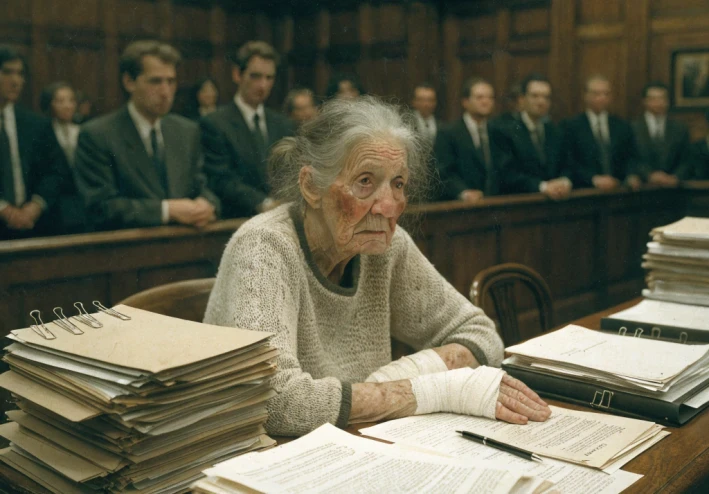
On February 27, 1992, 79-year-old Stella Liebeck was a passenger in her grandson's car in Albuquerque, New Mexico. Her grandson had pulled over into a parking lot so Stella could add cream and sugar to her coffee. The car lacked cup holders, so Stella placed the cup between her knees while attempting to remove the lid. As she tugged, the cup collapsed, spilling its entire contents onto her lap.
🔥 Gruesome Injuries and Coffee Temperature
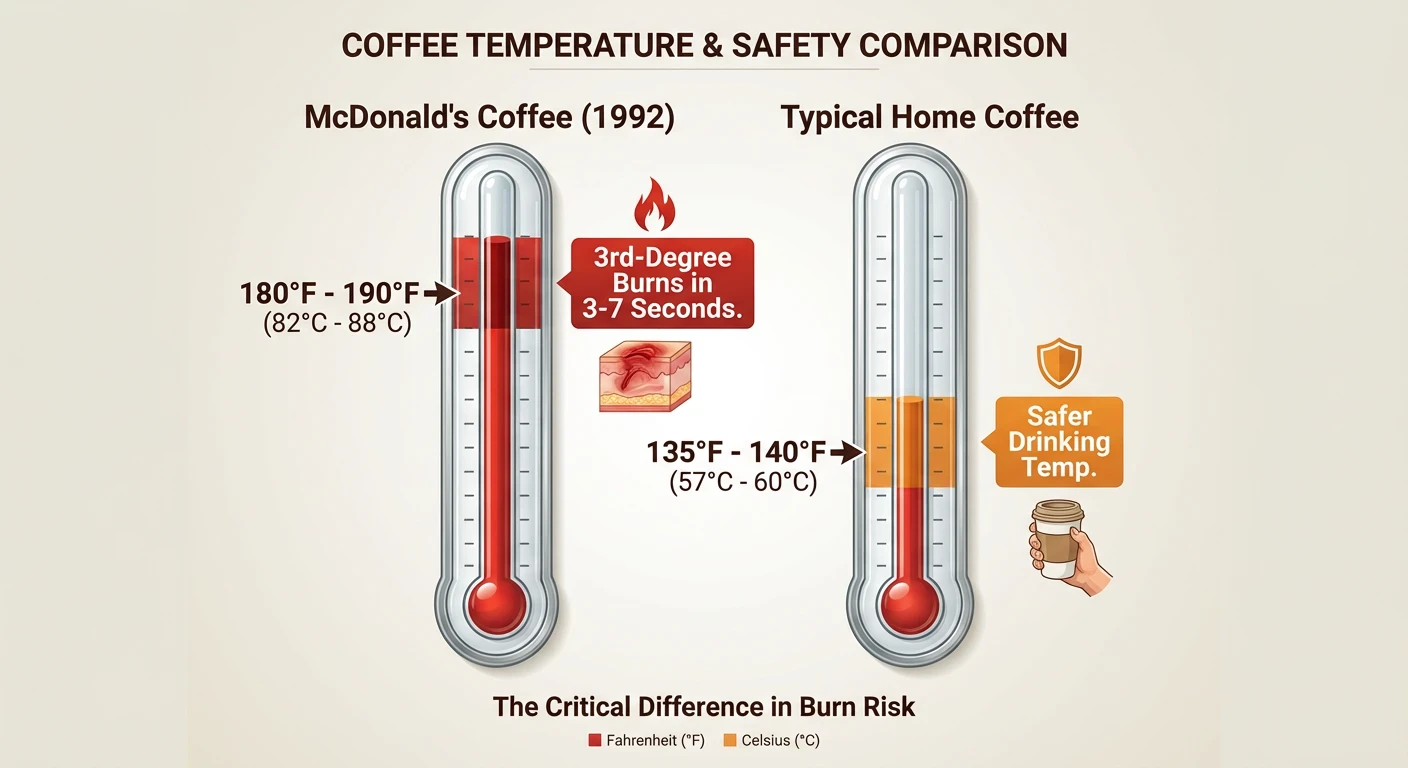
The coffee was not merely "hot"; it was served at an astonishing 180 to 190 degrees Fahrenheit (82-88 degrees Celsius). At these temperatures, liquids can cause full-thickness (third-degree) burns in just 3 to 7 seconds. Unfortunately, Stella was wearing thick cotton sweatpants, which absorbed the scalding liquid and held it against her skin.
[Suggested Image: A chart illustrating coffee temperatures and their effects on skin, or a representative image of burn effects.]
As a result, Stella suffered third-degree burns covering 6% of her body, including her inner thighs, buttocks, and genital area. She also sustained lesser burns over an additional 16% of her body. She spent eight days in the hospital and underwent painful skin grafting operations. She lost 20% of her body weight, dropping to 83 pounds, and required medical care for two full years.
⚖️ Why She Sued: The $800 Offer
Stella did not immediately rush to file a lawsuit. She simply wanted McDonald's to act responsibly. Her medical bills amounted to approximately $11,000. She wrote a letter to McDonald's asking them to review their coffee temperature and cover her medical expenses (requesting around $20,000 to cover current and future treatments). McDonald's response was a meager offer of just $800, and they refused to pay a penny more. Insulted by this offer, and considering the severity of her injuries, she retained an attorney and sued for "gross negligence."
🏛️ The Trial: Shocking Evidence and Deliberate Risks
During the trial, documents and testimony revealed facts that turned the jury against the corporation. Evidence showed that McDonald's corporate manual mandated coffee be held at 180-190°F. Experts testified that home-brewed coffee is typically consumed at 135-140°F. More alarmingly, McDonald's admitted to having received over 700 prior reports of people (including children) being burned by their coffee over the decade preceding the incident.
The company's callousness was evident when a McDonald's quality control manager testified that the number of burn victims was "statistically insignificant" compared to the billions of cups sold, and they had no intention of lowering the temperature. They argued that super-heated water extracted more flavor from the beans, saving them money.
💰 The Verdict and the Famous "Millions"
The jury found McDonald's 80% responsible for the incident, with Stella being 20% at fault for the spill. Stella was awarded $200,000 in compensatory damages (reduced to $160,000 due to her 20% fault) to cover her pain and bills. This is where the famous "millions" came from: punitive damages. The jury wanted to punish the company for ignoring their customers' safety. They asked, "How much does McDonald's make from coffee in one day?" The answer was approximately $1.35 million.
The jury awarded $2.7 million in punitive damages—essentially equivalent to two days of McDonald's coffee sales—to send a strong message to the corporation.
🔚 Long-Term Consequences and Legacy
The judge later reduced the punitive damages from $2.7 million to $480,000 (three times the compensatory amount). Ultimately, McDonald's and Stella reached a secret out-of-court settlement to avoid years of appeals (believed to be less than $600,000).
Stella Liebeck was not greedy; she was a victim of a product sold at a temperature capable of damaging skin in seconds. Because of her lawsuit, many food chains lowered their beverage serving temperatures and improved the design of their lids to be more secure. This case remains a powerful reminder of the importance of consumer safety and corporate responsibility.