


In this article
Beyond the Ice Wall: Myth, Mystery, and What Science Actually Found in Antarctica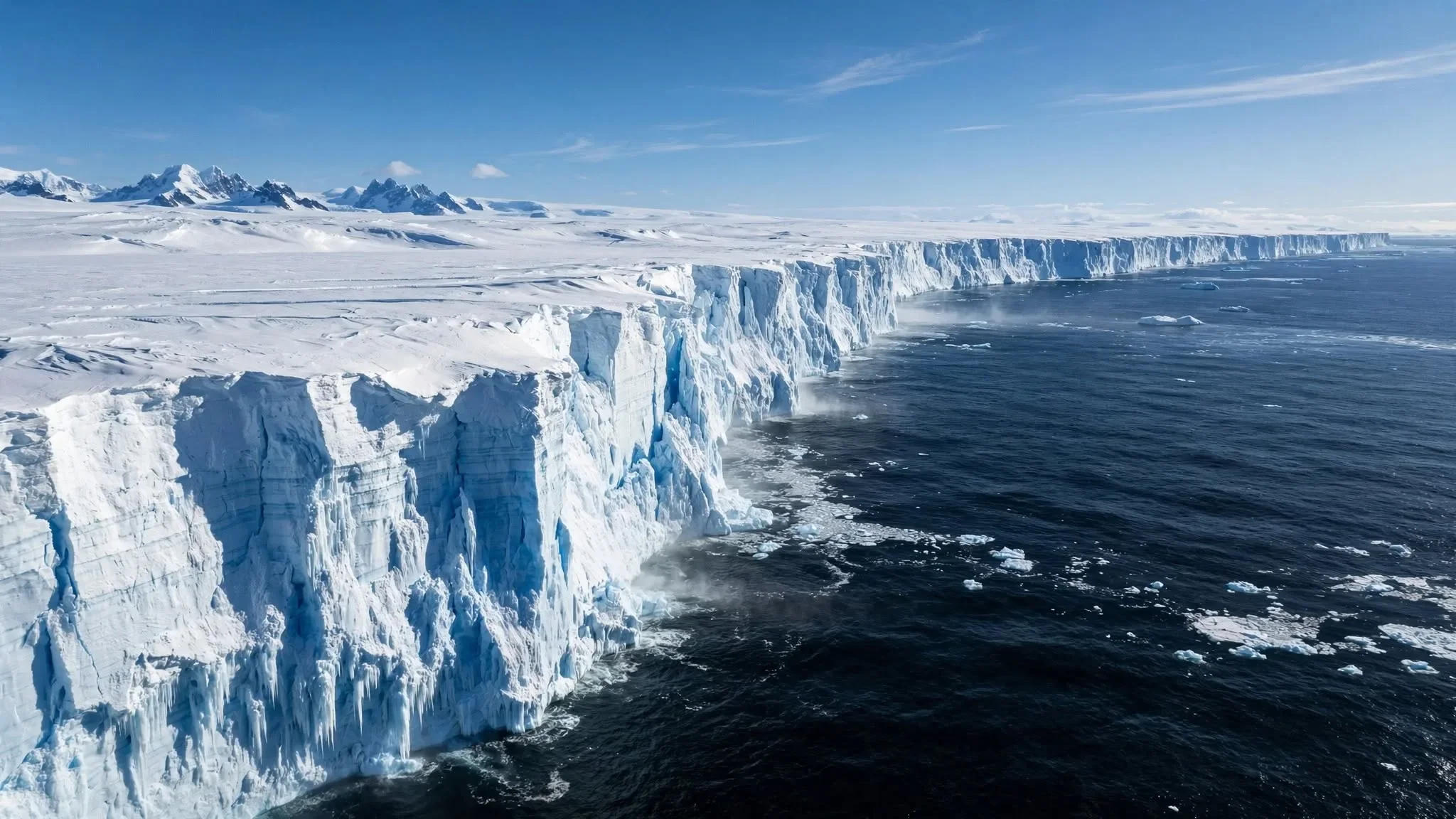
Few places on Earth inspire as much imagination as Antarctica. In recent years, one phrase has gone viral across social media: “beyond the ice wall.”
Some videos claim that a giant wall of ice hides secret lands, lost civilizations, or untouched worlds. Others treat the idea as a mystery worth exploring. But what does the phrase actually mean? Where did it come from? And what do explorers and scientists really find when they go to Antarctica?
This article separates the myth from the geography, the history, and the science.
1. Where Did the “Ice Wall” Idea Come From?
The modern ice wall theory is closely linked to flat-Earth beliefs from the 19th century. In books such as Samuel Rowbotham’s Zetetic Astronomy (1865), Antarctica was not described as a continent at the South Pole, but as a giant ring of ice surrounding a flat world.
In this model, the “ice wall” is what supposedly keeps the oceans from falling off the edge of the Earth. According to supporters of this idea, what lies beyond the wall could be more land, more oceans, or even other worlds that are hidden from the public.
It is important to be clear: this is a belief, not a scientific finding. There is no verified evidence for a wall enclosing a flat Earth, and no credible expedition has ever documented hidden continents beyond Antarctica.
What made the idea spread again was not a new discovery, but social media. Short videos, dramatic music, and satellite images taken out of context made Antarctica look mysterious — and mystery travels fast online.
2. What Antarctica Really Looks Like
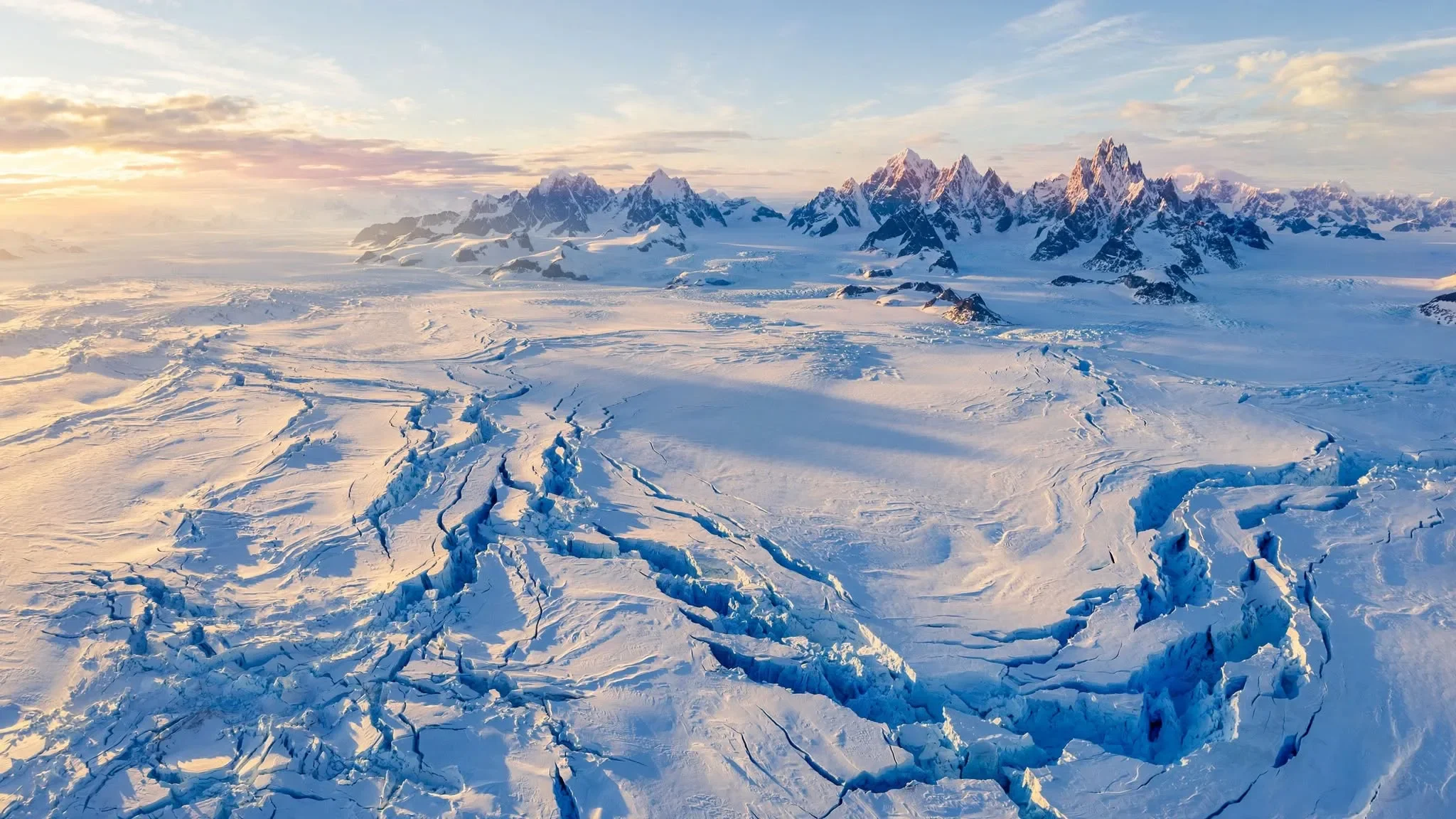
Antarctica is the fifth-largest continent. It covers about 14 million square kilometers, almost twice the size of Australia. Around 98% of it is covered by ice, with an average thickness of about 1.9 kilometers.
What many people call the “ice wall” is real in one sense: Antarctica has enormous ice shelves and cliffs. The most famous is the Ross Ice Shelf, a massive floating platform of ice that rises like a white wall above the sea. In 1841, British explorer James Clark Ross sailed along it and described a towering barrier of ice.
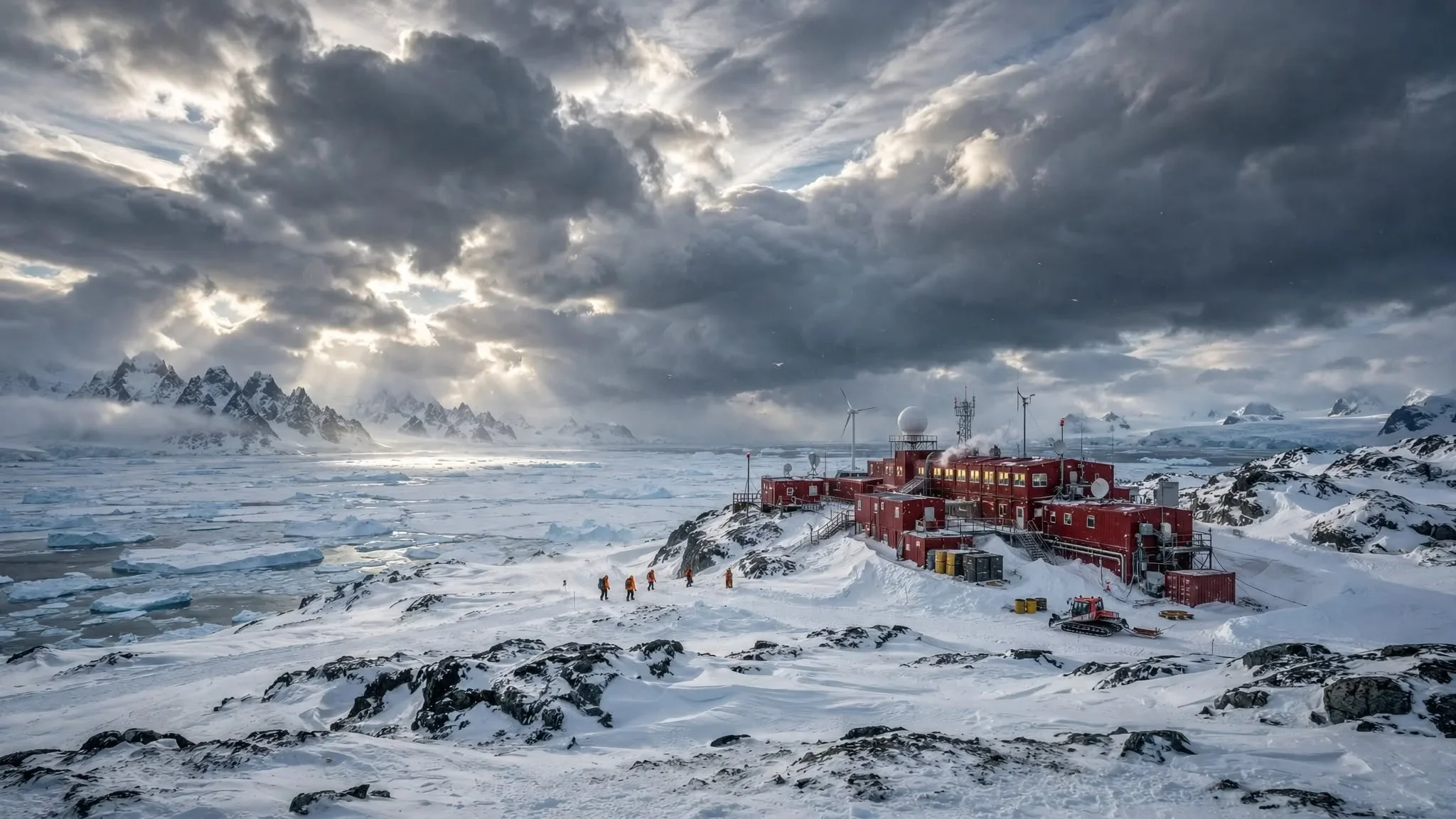
But these are not walls around the edge of a flat world. They are natural formations at the edge of a continent. Behind them are not secret lands, but more ice, mountains, research stations, and one of the harshest environments on the planet.
Scientists have mapped Antarctica in detail using satellites, radar, aircraft, and ground expeditions. The continent has mountain ranges, such as the Transantarctic Mountains, dry valleys with almost no snow, active volcanoes like Mount Erebus, and vast ice sheets that hold about 70% of the world’s fresh water.
3. Why Is Antarctica So Restricted? The Antarctic Treaty Explained
One of the main reasons the ice wall theory survives is a real question: why can’t anyone just go and explore Antarctica freely?
The answer is not a secret world government. It is a public international agreement called the Antarctic Treaty System.
The Antarctic Treaty was signed in 1959 by 12 countries and entered into force in 1961. Today, more than 50 countries are part of the system. Its main principles are:
• Antarctica shall be used for peaceful purposes only • Military activity, weapons testing, and mining are banned • Scientific research is free and should be shared • No country can make a new territorial claim
Tourism is allowed, but it is strictly controlled. Visitors usually arrive on guided cruises, follow environmental rules, and cannot disturb wildlife or leave waste behind. Independent travel is extremely difficult, not because it is forbidden by a secret force, but because Antarctica is dangerous, remote, and protected by international law.
In other words, the continent is not closed because something is hidden. It is protected because it is fragile, and because scientists want to study climate change, glaciers, and ecosystems without military or commercial interference.
4. What Scientists Have Actually Found Beyond the Ice
If there are no hidden kingdoms, is Antarctica boring? Far from it. What researchers have found is in many ways stranger than fiction.
1. Ancient lakes under the ice
Lake Vostok, buried under nearly 4 kilometers of ice, has been isolated for millions of years. Scientists study it to understand how life can survive in extreme conditions — and how life might exist on icy moons like Europa.
2. Fossils of a green Antarctica
Antarctica was not always frozen. Fossils show that it once had forests, dinosaurs, and a much warmer climate. Studying those fossils helps scientists understand how Earth’s climate has changed over millions of years.
3. Meteorites and space history
Because meteorites are easy to spot on white ice, Antarctica is one of the best places in the world to find rocks from space, including pieces of Mars and the Moon.
4. Climate records
Ice cores drilled from Antarctica contain air bubbles that are hundreds of thousands of years old. They are like a time machine for studying past temperatures and greenhouse gases.
None of these discoveries require a secret wall. They are documented, peer-reviewed, and open to scientists from many countries.
5. Why Do People Still Believe in Hidden Lands?
The ice wall theory continues because it touches something human: curiosity about the unknown.
Antarctica is still one of the least visited places on Earth. Most people will never go there. When a place is remote, cold, and rarely seen in daily life, it is easy to fill the gaps with imagination.
There is also distrust. When people do not trust governments or large institutions, a restricted continent can look like proof of a cover-up, even when the restrictions are public and explained in treaties.
Finally, the internet rewards mystery. A video titled “They Don’t Want You to See This” gets more clicks than a video titled “Scientists Study Ice Cores.” But clicks are not evidence.
The best way to explore Antarctica today is not through viral clips, but through real expeditions, documentaries, satellite maps, and scientific publications — all of which are publicly available.
Conclusion: The Real Mystery Is More Interesting
There is no verified evidence of hidden worlds beyond an Antarctic ice wall. What lies beyond the ice shelves is not a secret civilization, but a vast, frozen continent that scientists are still exploring.
And that is, in itself, extraordinary. A continentburied under ice, holding the history of Earth’s climate, ancient life, and perhaps clues to life beyond our planet.
The ice wall is not a door to another world. It is a reminder that our own world still has places we barely understand — and that real exploration is slower, harder, and far more fascinating than any viral theory.Sources and Further Reading: • Antarctic Treaty Secretariat – The Antarctic Treaty System • NASA – Antarctica and Earth Science Research • British Antarctic Survey – Discovering Antarctica • National Science Foundation – U.S. Antarctic Program
Editorial Note: This article explores a popular internet theory for educational purposes. Claims about hidden lands beyond an ice wall are presented as unverified beliefs, not as established facts.
Keep up with Sami Mejri
Choose site notifications, email, or both. Guests can subscribe by email without an account.
Report this article
Tell our review team about a problem with this content. Your details will not be shown to the author or other readers.
Your report could not be sent. Please try again later.
Sign in to report an article








Discussion
comments (0)
Share a perspective. Start a thoughtful conversation.
please login to be able to comment