
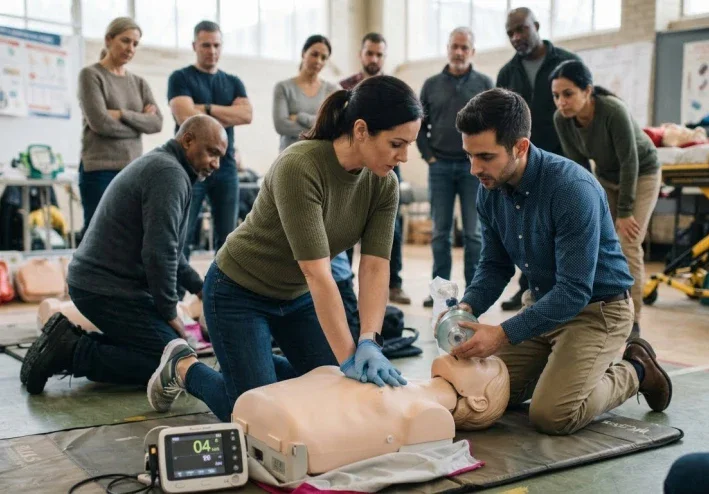
In this article
Adult BLS sequence:
1.
Verify scene safety:
•
Move the person out of traffic.
•
Unplug electricity
•
Be sure you do not become injured yourself
2.Check for responsiveness
•
Shake or tap the person.
•
See if the person moves or makes a noise, and talk to them loudly (Are you ok?).
3. Call for help
•
Shout for nearby help
•
Activate emergency response system send someone to get an AED.
•
If alone, call for help while assessing for breathing and pulse. (The AHA emphasizes that cellphones are available everywhere now and most have a built-in speakerphone. Call for help without leaving the person.)
4. Check breathing and pulse
•
Check to see if the unconscious person is breathing by looking at the chest movement.
•
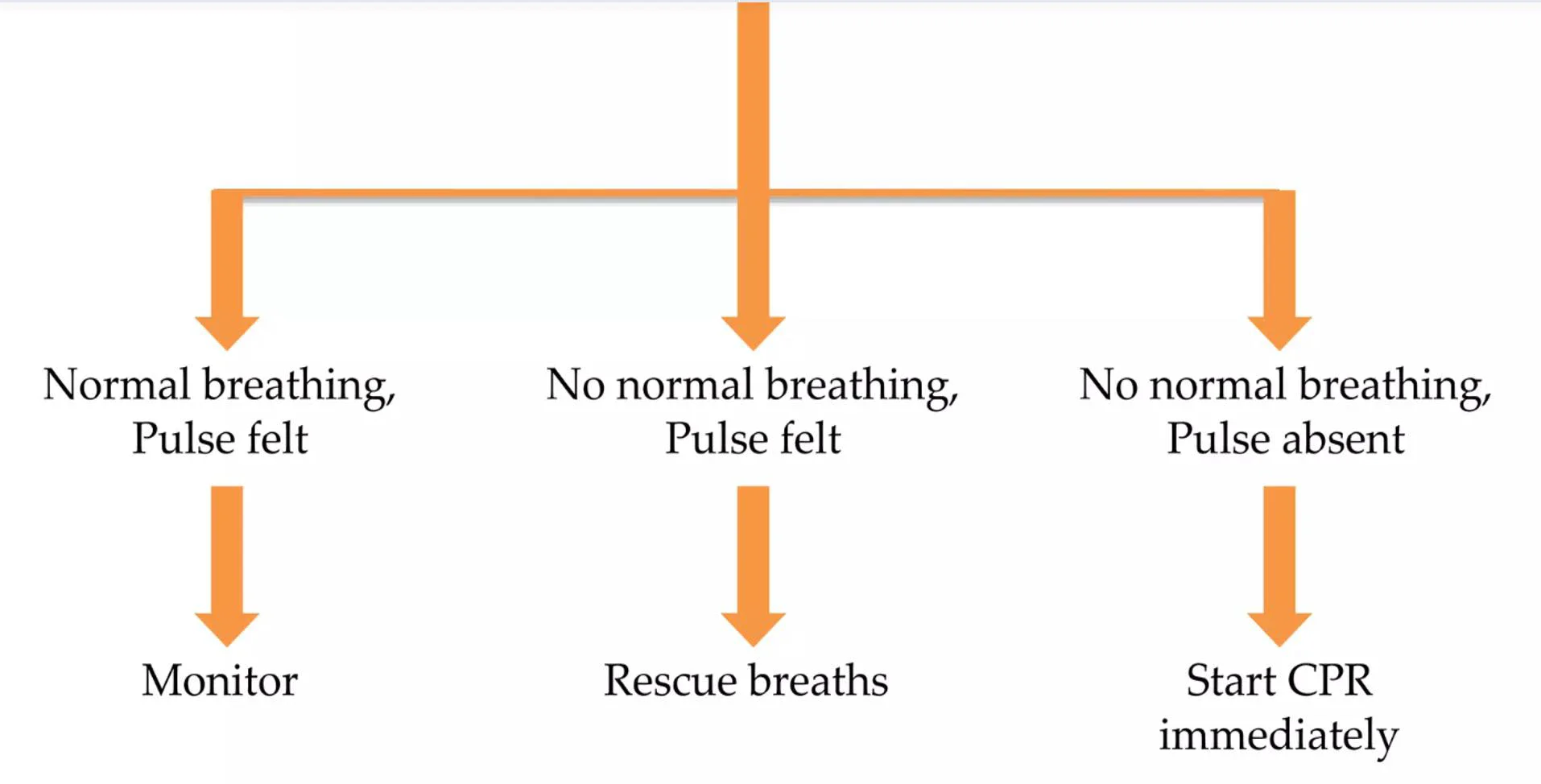
If you found No breathing or abnormal breathing (i.e only gasping), you should assume the person is in cardiac arrest.
•
Check the carotid pulse for 5 to 10 seconds
5. Start CPR
•
If no pulse within 10 seconds or if you are not sure, start chest compressions and ventilation
•
In OHCA, a chest compression–only approach is appropriate if lay rescuers are untrained or unwilling to provide breaths
Steps for providing CPR
•
If no breathing and pulse not felt, OR if you are not sure you feel a pulse, begin CPR with a cycle of 30 chest compressions.
•
After 30 compressions, stop compressions and open the airway
•
Give 2 rescue breaths while watching the chest rise. Each breath should be delivered over one second.
•
Resume chest compressions. Switch quickly between compressions and rescue breaths to minimize interruptions in chest compressions.
•
Each cycle in adult CPR is formed of 30 compressions : 2 breaths
•
Use AED as soon as it is available
Chest compressions
•
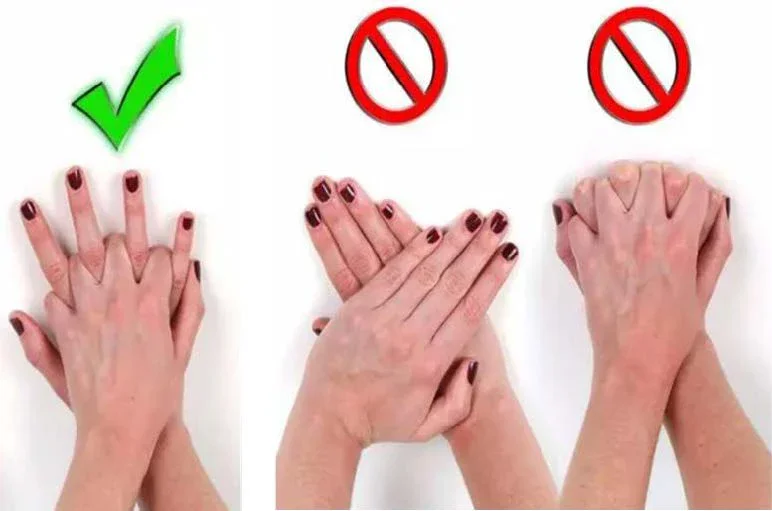
Place the heel of one hand on the lower half of the sternum in the middle of the chest
•
Place other hand on top
•
Interlock fingers
•
Elbows straight and shoulders above the victim’s chest
•
Compress the chest (High quality CPR)
•
Rate 100 to 120 / min
•
Depth 5-6 cm (2-2.4 inches)
•
Allow complete chest recoil
•
When 2 or more rescuers are available, switch CPR operator every 2 min or 5 cycles.
Airway opening
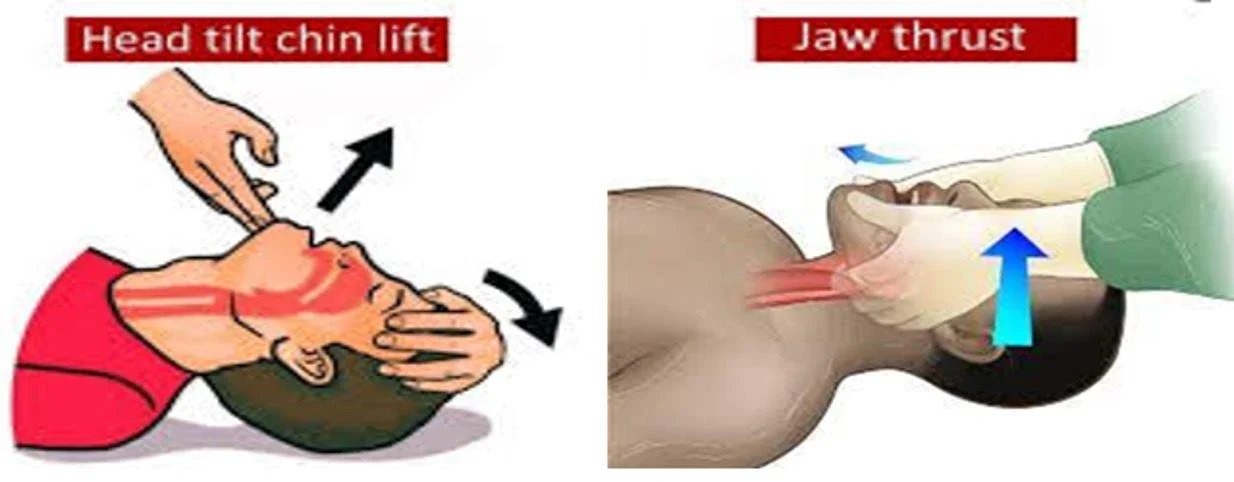
Head-tilt/chin-lift:
(No risk of cervical spine injury)
•
Put your hand on the person’s forehead and tilt the head back.
•
Lift the person’s jaw by placing your index and middle fingers on the lower jaw; lift up the jaw.
Jaw thrust maneuver:
(Risk of cervical spine injury)
•
Use two or three fingers of each hand to lift the jaw upward and outward so that the lower centr
al incisors are anterior to the upper central incisors.
•
Use both thumbs to push down on the chin to open the mouth.
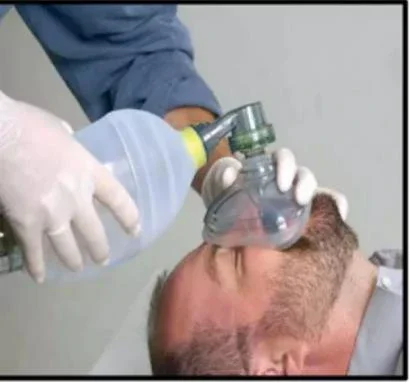
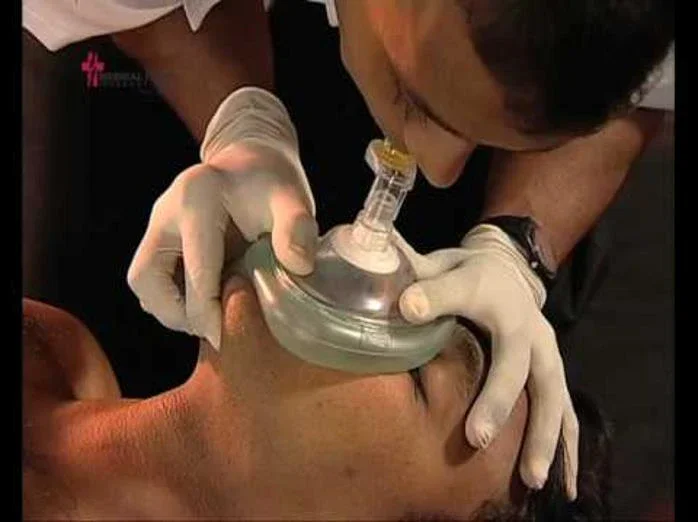
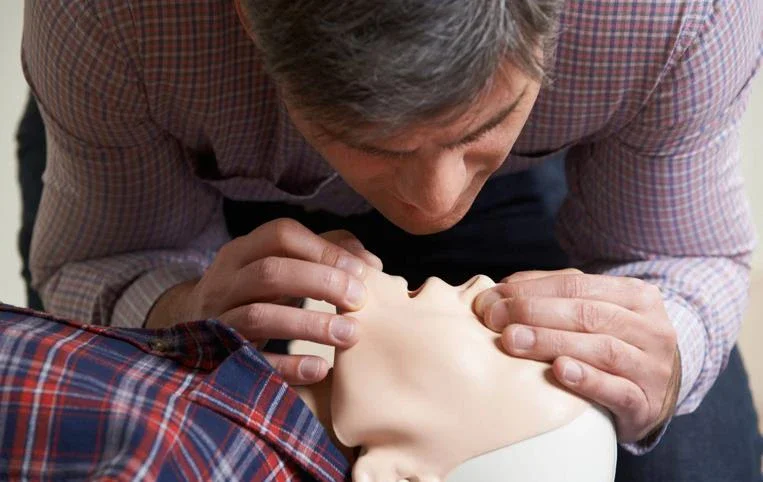
Rescue breathing
•
A technique used to resuscitate a person who has stopped breathing, in which the rescuer forces air into the victim's lungs at intervals of several seconds.
Methods of rescue breathing:
•
Each rescue breath should be delivered over 1 second.
•
Watch for chest rise.
•
If the chest does not rise, reposition the head and attempt to deliver another breath.(Max 10 seconds CPR interruption)
•
Allow time for the air to expel from the patient
Report this article
Tell our review team about a problem with this content. Your details will not be shown to the author or other readers.
Your report could not be sent. Please try again later.
Sign in to report an article







Discussion
comments (0)
Share a perspective. Start a thoughtful conversation.
please login to be able to comment