How to Read People Like a Pro (Simple Version)
How to Read People Like a Pro (Simple Version)
Have you ever walked into a room and felt like something wasn’t right
Or talked to someone who says one thing, but their body says something else
Reading people isn’t just for experts—it’s a skill anyone can learn
Microexpressions (quick facial reactions)
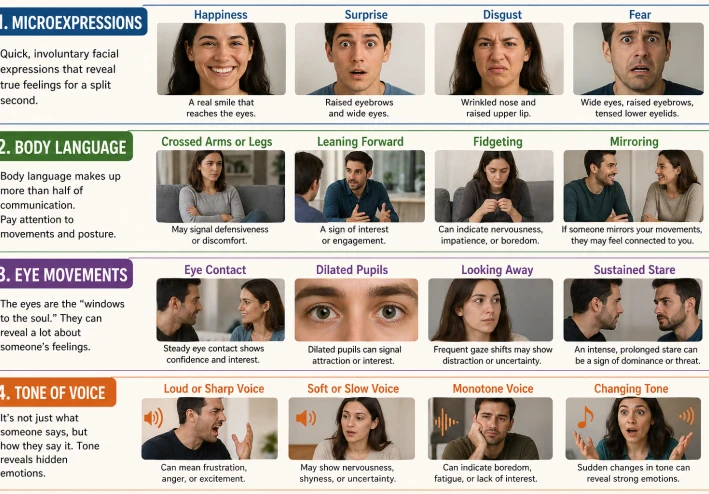
These are very fast facial expressions that show real feelings—even if someone tries to hide them. With practice, you can start to notice them:
Happiness: a real smile that reaches the eyes
Surprise: raised eyebrows and wide eyes
Disgust: a wrinkled nose and raised upper lip
These expressions happen in a split second, but they can reveal what someone truly feels
Body Language
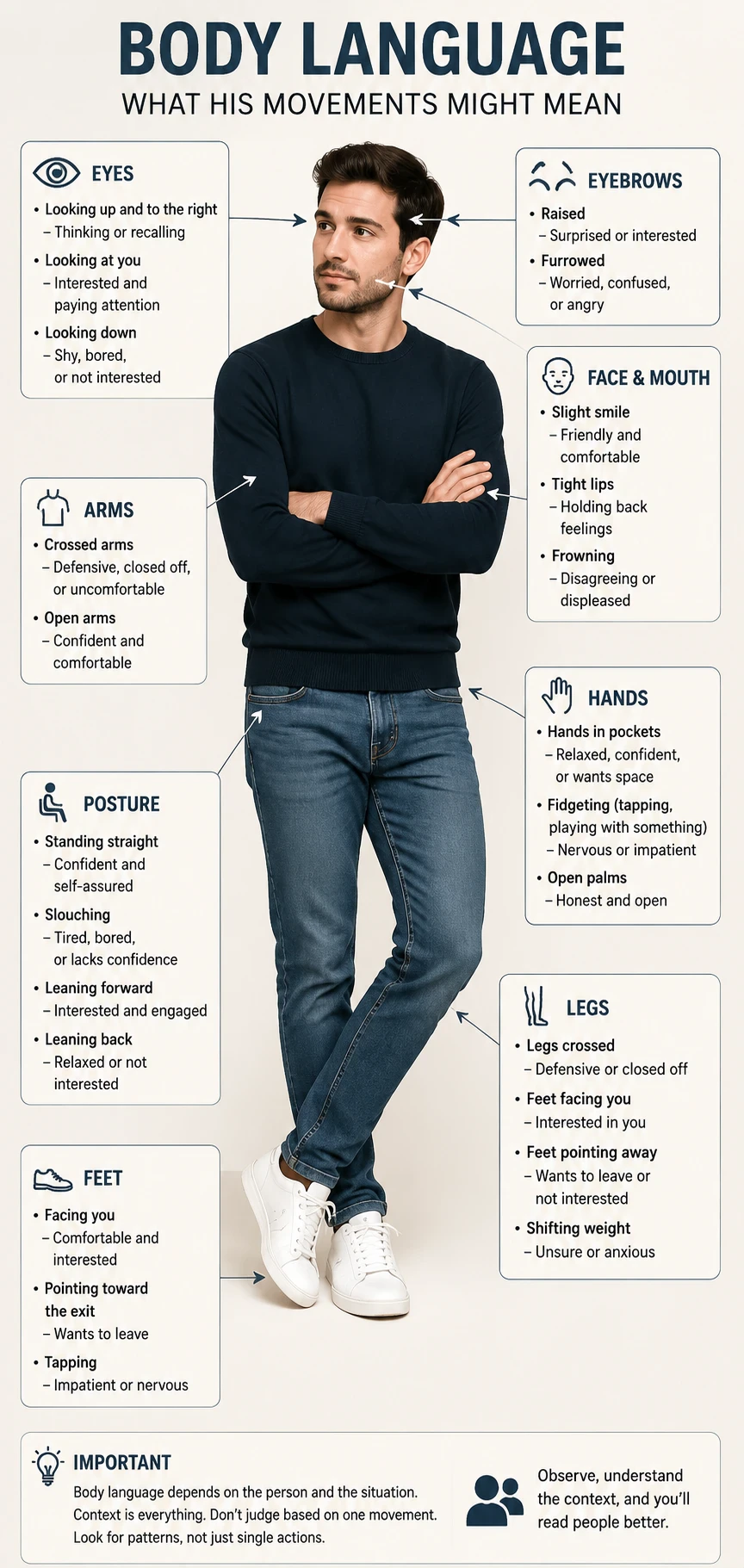
A big part of communication comes from body language. Sometimes, what people don’t say is more important than what they actually say. Pay attention to small details like:
Crossed arms or legs
Leaning forward or backward
Fidgeting (playing with hands, phone, etc.)
Mirroring your movements
Leaning forward usually means interest and engagement, while leaning back can mean someone feels relaxed—or maybe not interested. Fidgeting can show nervousness, boredom, or even excitement depending on the situation. And when someone copies your movements naturally, it often means they feel comfortable with you
Facial expressions also play a big role in body language. Even small changes in the face can show emotions like confusion, doubt, or agreement without saying a word
But here’s the most important thing: body language isn’t one-size-fits-all—it really depends on the person in front of you. For example, crossing arms or legs doesn’t always mean someone is uncomfortable; for some people, that’s simply their natural and relaxed way of sitting
That’s why you should always read body language based on the person and the situation, because context matters a lot.
Also, don’t try to analyze every single movement when you meet someone for the first time. One signal can have many different meanings, and you don’t know their natural behavior yet. Take your time, and focus on patterns instead of judging too quickly
Another important tip is to look for consistency. If someone’s words don’t match their body language, that’s when you should pay closer attention. For example, if someone says “I’m fine” but avoids eye contact and looks tense, they might not actually be fine
In the end, body language is like a puzzle—you shouldn’t judge based on one piece, but on the full picture
Eye Movements
Eyes can tell you a lot about what someone is feeling
Good eye contact usually shows confidence and interest
Avoiding eye contact may mean discomfort or hiding something
Dilated pupils can signal interest or attraction
Looking around a lot may show distraction or uncertainty
Tone of Voice
It’s not just what people say—it’s how they say it
A loud or sharp tone can mean frustration or excitement
A soft or slow voice may show nervousness or uncertainty
A flat, monotone voice can mean boredom or lack of interest
If you pay attention to these small details, you’ll start to understand people better—and notice what they really feel, even if they don’t say it directly