
في هذا المقال
In 1964, a San Diego high school student named Randy Gardner embarked on a journey that would redefine our understanding of the human brain. He stay awake for 11 days and 25 minutes (264 hours). By day two, his speech was slurred. By day five, he was hallucinating, convinced he was a famous football player. By the end, he couldn’t perform simple serial subtraction
Gardner’s experiment was so dangerous that Guinness World Records stopped officiating sleep deprivation attempts. It proved a vital point: sleep is not an optional lifestyle choice; it is a biological necessity
In a world that prizes "the hustle," many view shut-eye as a waste of time. However, modern neuroscience reveals that sleep is the most effective cognitive enhancer and health supplement known to man
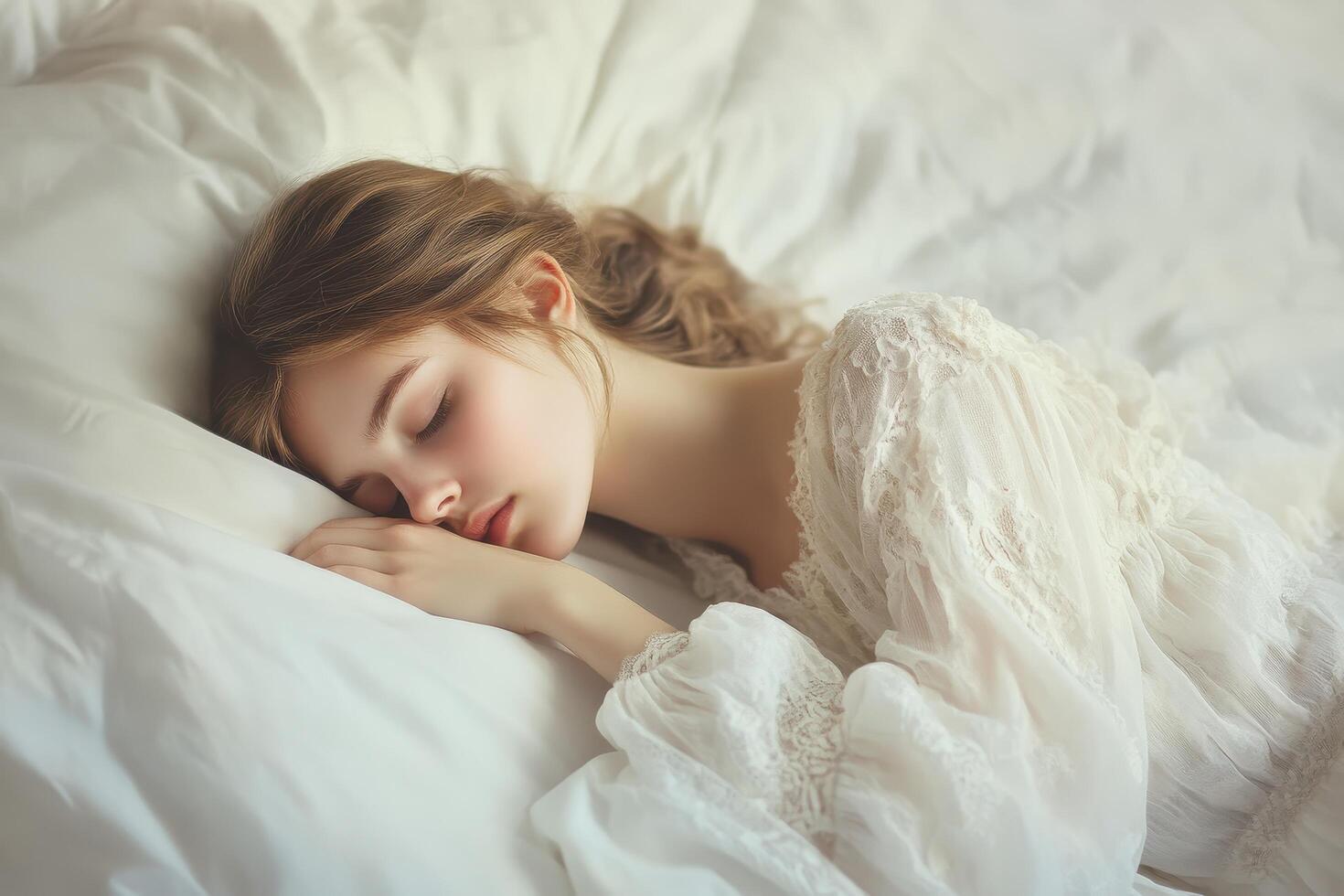
The Biological Reality of the "Miracle Drug"
Imagine a pharmaceutical breakthrough: a pill that extends your life, enhances memory, protects against cancer, prevents heart attacks, and regulates your metabolism. This drug has no side effects and is completely free.
That "medicine" is restful slumber.
Far from being a state of "nothingness," sleep is a period of intense physiological activity. While you are unconscious, your brain and body are performing deep-level maintenance that is impossible to achieve during waking hours.
The Core Pillars of Sleep Science
To understand why we need nocturnal rejuvenation, we must look at the three primary functions performed during the night:
Neuro-Memory Consolidation
The brain acts like a digital recorder during the day, storing data in the hippocampus (short-term storage). However, the hippocampus has limited capacity. During slow-wave sleep, the brain "uploads" these files to the cortex (long-term storage).
Scientific Correction: Many believe sleep just "rests" the brain. In reality, the brain is sometimes more active during sleep (especially in REM (Rapid Eye Movement)) than when awake, specifically for memory processing.
The Glymphatic System: Brain Cleaning
One of the most significant recent discoveries in neuroscience is the "Glymphatic System." While you sleep, the space between your brain cells increases, allowing cerebrospinal fluid to flush out metabolic waste, including Beta-amyloid—the protein associated with Alzheimer’s disease. Without this "nightly power wash," toxins build up, leading to brain fog and long-term cognitive decline.
Metabolic and Physical Repair
Sleep is the primary time for tissue growth and muscle repair. Growth hormone is released in pulses during deep sleep, facilitating the healing of the "wear and tear" from your daily activities.
Comparison: The Stages of Sleep
Understanding sleep requires knowing that not all unconsciousness is created equal. We cycle through various stages roughly every 90 minutes.
| Sleep Stage | Type | Primary Function | Consequences of Lack |
|---|---|---|---|
| Stage 1 & 2 | Light NREM | Transitioning to sleep; heart rate slows. | Grogginess and decreased alertness. |
| Stage 3 & 4 | Deep NREM | Physical repair, immune boosting, growth. | Physical weakness, chronic pain, illness. |
| REM | Rapid Eye Movement | Emotional processing, creativity, dreaming. | Mood swings, anxiety, loss of focus. |
The Deadly Cost of Sleep Deprivation
The World Health Organization (WHO) has officially declared a "sleep loss epidemic" in industrialized nations. The consequences of missing even a small amount of consistent rest are staggering.
Heart Health and the 24-Hour Test
Every year, we conduct a global experiment on millions of people: Daylight Savings Time. When we lose one hour of sleep in the spring, there is a documented 24% increase in heart attacks the following day. Conversely, when we gain an hour in the autumn, there is a 21% decrease. This shows how razor-thin the margin for error is for our cardiovascular systems.
The Immune System’s "Natural Killers"
One night of four hours of sleep wipes out roughly 70% of your natural killer cell activity. These cells are the elite "assassins" of your immune system that identify and destroy cancerous cells. This is why short sleep duration is a leading predictor for several forms of cancer.
Societal Catastrophes
Sleep deprivation doesn’t just kill individuals; it kills communities
Chernobyl: The operators had been working for 13 hours or more without adequate rest
The Challenger Shuttle: Key managers made the fatal decision to launch after only a few hours of sleep, leading to compromised judgment
Debunking the Myths of "The Hustle"
To master your health, you must unlearn the dangerous myths promoted by modern culture
The "Weekend Catch-Up": You cannot "repay" a sleep debt. Sleep is not like a bank account where you can overdraw during the week and deposit on Sunday. The neurological damage from five days of deprivation cannot be reversed by two days of oversleeping
The "Elite Sleeper" Myth: Many claim they are fine on 5 hours of sleep. While a rare genetic mutation (the DEC2 gene) allows a tiny fraction of the population to function this way, you are statistically more likely to be struck by lightning than to possess this gene
Coffee is a Substitute: Caffeine does not provide energy; it simply blocks Adenosine—the chemical that signals "sleep pressure" to your brain. Once the caffeine wears off, the Adenosine "floodgates" open, leading to a massive crash
Sleep and the Younger Generation: A Biological Conflict
Our current education system is fundamentally misaligned with adolescent biology. During puberty, the "circadian rhythm" (the internal body clock) shifts forward. A 16-year-old’s brain doesn't naturally want to sleep until 11:00 PM or midnight
Forcing a teenager to start school at 7:30 AM is the biological equivalent of forcing an adult to start work at 3:30 AM. When schools delay start times by just one hour, we see
Significant increases in GPA and test scores
A 70% reduction in teen car accidents
Decreased rates of depression and anxiety
5Practical Tips for Better Sleep Hygiene
If you struggle with insufficient downtime, follow these science-backed protocols
Consistency is King: Go to bed and wake up at the same time every day, even on weekends
Lower the Temperature: Your brain needs to drop its core temperature by about 2-3 degrees Fahrenheit to initiate sleep. A cool room (around 18°C or 65°F) is optimal
The Darkness Protocol: Dim the lights an hour before bed. Blue light from phones suppresses Melatonin, the hormone that tells your body it is nighttime
Don't Lie Awake: If you can't fall asleep after 20 minutes, get out of bed. Do something relaxing in dim light. Your brain must associate the bed with sleep, not with anxiety or "tossing and turning."
Cut the Caffeine Early: Caffeine has a half-life of about 5-6 hours. A cup of coffee at 4:00 PM is still 50% active in your system at 10:00 PM
Conclusion: Reclaiming Your Biological Right
Sleep is the foundation of the "Health Trinity," alongside diet and exercise. However, it is the most critical of the three. You can go longer without food or exercise than you can without nightly dormancy
Think of your body like a high-end smartphone. You can use it all day for incredible tasks, but if you don't plug it in for a full "system update" and "recharge," it eventually becomes a useless brick. To perform at your peak, to be present for your family, and to protect your long-term health, you must stop treating sleep as a luxury and start treating it as your life support system
Are you getting your 8 hours? Share your best sleep tips or your struggles with insomnia in the comments below








النقاش
التعليقات (0)
فكرة تضيفها، أو سؤال يفتح حوارًا.
الرجاء تسجيل الدخول لتتمكن من التعليق