
في هذا المقال
The bittersweet taste of your favorite chocolate bar often hides a dark and unsettling reality. While millions of people across the globe enjoy these treats, the production process behind them is frequently linked to youth forced labor, systemic poverty, and environmental destruction.
Major chocolate brands have spent decades promising to clean up their supply chains, yet investigations continue to find young children working in dangerous conditions. This article explores the current state of the cocoa industry, the broken promises of global corporations, and why the problem of illegal child work remains so persistent in West Africa
The Broken Promise of the Harkin-Engel Protocol
In 2001, the world’s largest chocolate manufacturers signed a landmark agreement known as the Harkin-Engel Protocol. This voluntary international agreement aimed to eliminate the "worst forms of child labor" in the cocoa sectors of Ivory Coast and Ghana.
However, more than twenty years later, the industry has missed every single deadline it set for itself—first in 2005, then 2008, 2010, and 2020. Despite these public vows, underage exploitation continues to be a standard part of the cocoa harvesting process.
A History of Missed Deadlines
The chocolate industry frequently pays lip service to social responsibility while failing to put in the necessary effort or resources to create real change.
| Year | Milestone | Status |
|---|---|---|
| 2001 | Harkin-Engel Protocol signed | Initial commitment |
| 2005 | First deadline to end child labor | Missed |
| 2008 | Second deadline to end child labor | Missed |
| 2020 | Goal to reduce child labor by 70% | Missed |
| 2025 | Current target for eradication | Ongoing |
The Reality on the Ground: Ghana and Ivory Coast
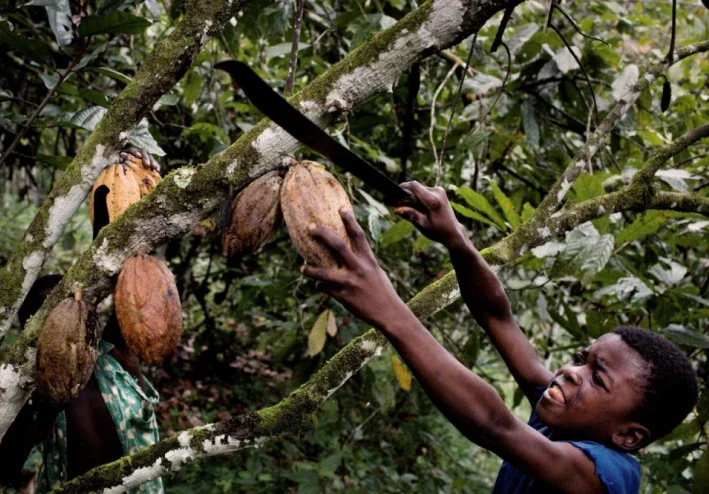
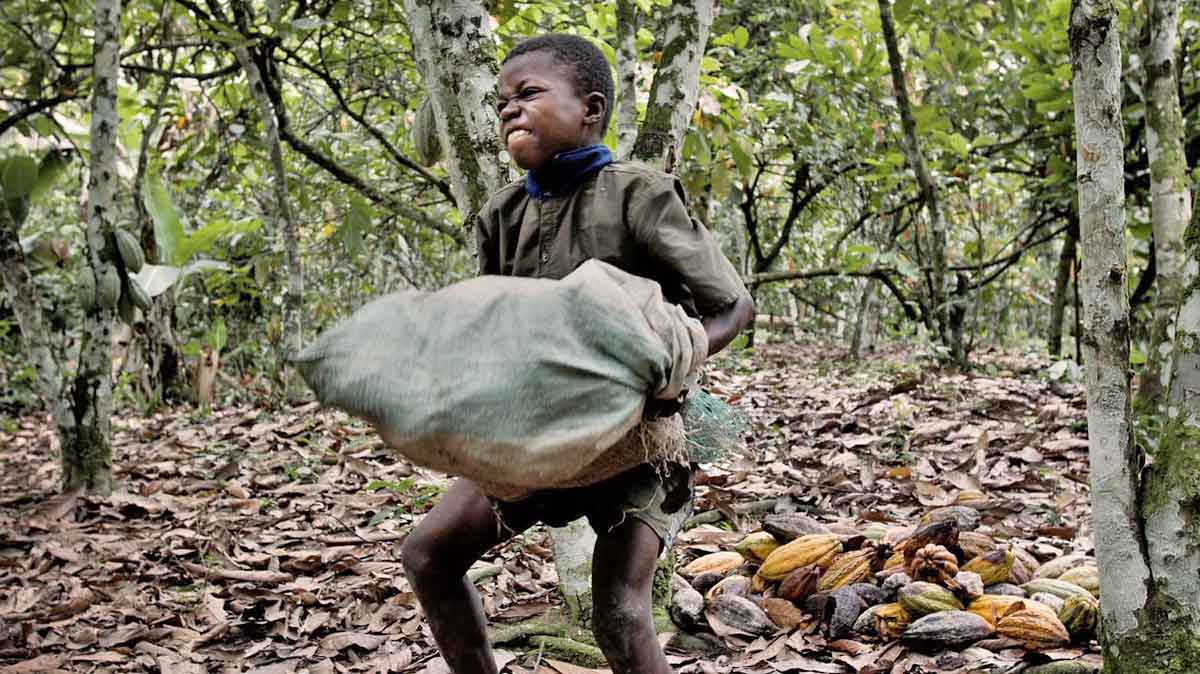
Investigations into farms that supply giants like Mars and Nestlé have revealed a stark contrast between corporate marketing and the reality of cocoa farming. In remote regions, children as young as five or six years old are found performing backbreaking work.
Dangerous Conditions for Young Workers
These children are not just helping their parents with light chores. They are often found
- Using large machetes to harvest cocoa pods
Carrying heavy loads that are far beyond their physical capacity
Applying toxic pesticides without any protective gear
Working in blistering heat for long hours instead of attending school
"I feel sad. I want to be a medical doctor, but they don't have money to support me." — Munira, a 15-year-old girl working on a cocoa farm in Ghana
For many of these minor workers, school is a luxury they cannot afford. In one investigation, every student in a local classroom raised their hand when asked if they worked on cocoa farms, often doing so before or after school hours
The Root Cause: A Vicious Cycle of Poverty
The primary reason for the persistence of juvenile servitude is extreme poverty. Ghana and Ivory Coast are responsible for about 60% of the world’s cocoa production, yet the farmers who grow the beans see very little of the profits
The Economics of Cocoa
A 140-pound sack of cocoa might fetch only about $115. For many subsistence farmers, this represents their entire income for the year. Because they earn so little, they cannot afford to hire adult laborers and must rely on their own children to survive.
If the children do not work, the family may starve. This creates a "vicious cycle" where poverty forces children out of school and into the fields, ensuring the next generation remains stuck in the same economic trap
Important Note for Readers: Most cocoa is grown on hundreds of thousands of small, isolated family plots rather than large, corporate-owned plantations. This makes monitoring and regulation extremely difficult
Trafficking and Modern Slavery
The cocoa industry is also plagued by the trafficking of children across borders. In Mali, one of the world's poorest countries, traffickers lure children away from their villages with the promise of paid work
These children are often bused to border towns and then smuggled into the Ivory Coast on motorbikes via unofficial back roads to avoid authorities. Once they arrive at the plantations, some of these children work for years without pay, essentially living as slaves
In some cases, a child can be "bought" for as little as €230, which covers their transport and indefinite use on a farm
Environmental Destruction: "Cannibal Cocoa"
The expansion of the cocoa industry has led to massive deforestation, particularly in the Ivory Coast, which has lost about 90% of its forest cover since 1960
The Pattern of Deforestation
. Forest Clearing: Farmers enter protected primary forests to clear land.
. Monoculture: They plant cocoa in a monoculture system that requires "full sun" and heavy chemical use.
. Soil Exhaustion: After about 20 years, the soil is depleted of nutrients and becomes worthless.
. Repeat: The farmers move deeper into the remaining forest to start the process again.
This process is sometimes described as "cannibal cocoa" because it consumes the very environment it depends on. Without the forests, the region sees less rainfall, which eventually makes cocoa farming impossible.
The Corporate Response: Denials and Deflections
When confronted with evidence of unethical chocolate production, many large corporations use their complex supply chains as a shield. They argue that because they do not own the farms directly, they cannot be held responsible for the labor practices used there.
Fake Lists and Flawed Monitoring
Many companies claim to have "robust monitoring systems" to keep children in school. However, whistleblowers have revealed that the data in these systems is often “fake or incorrect”
In one instance, CBS News visited children listed as "beneficiaries" of a Mars monitoring program only to find that none of them were in school, and some had not been visited by a monitor in over 18 months. When reporters attempted to get answers from Mars executives, they were repeatedly declined interviews and even asked to leave the company's headquarters
Profit vs. Aid
The financial disparity between the chocolate giants and the farmers is staggering.
| Company | Annual Turnover | Estimated Aid Spending on Cocoa Programs |
|---|---|---|
| Nestlé | Over $100 Billion | Approximately $6 Million (Industry average) |
| Mars | Billions (Owned by 3rd wealthiest US family) | Unspecified "monitoring" costs |
?Is Traceability the Solution
Experts and activists argue that traceability is the key to ending cocoa slave labor. If every bag of cocoa could be traced back to the specific farm and producer, companies would be forced to take responsibility for the conditions on those farms.
Some regions have attempted to implement GPS tracking and barcoding for cocoa sacks, but these systems are not yet universal. Without full transparency, "criminal cocoa" from illegal forest plantations continues to be mixed with legal cocoa at collection points, making it impossible for consumers to know the true origin of their chocolate.
?What Needs to Change
: To truly eradicate child labor and deforestation in the cocoa industry, several systemic changes are required
. Living Wages: Companies must pay farmers a significantly higher price for cocoa so they can afford adult labor and school fees•
.Infrastructure: Developing nations need more schools that are easily accessible to rural children so they don't have to travel long dista•
. Legislation: Stronger laws in Europe and the US are needed to sanction companies that profit from human rights abuses in their supply chains•
Consumer Awareness: Consumers can demand higher standards and be willing to pay a few cents more per bar if that money goes directly to improving farmer income
The tragedy of the cocoa industry is that the solutions are known, but the will to implement them has been lacking for decades. Until the industry prioritizes human rights over profit margins, the bittersweet reality of chocolate will remain.









النقاش
التعليقات (0)
فكرة تضيفها، أو سؤال يفتح حوارًا.
الرجاء تسجيل الدخول لتتمكن من التعليق