
في هذا المقال
Understanding Anemia: Causes, How to Spot Symptoms, Initial Treatments, and Prevention
Feeling exhausted after a full night of sleep or getting winded from climbing a single flight of stairs is easy to blame on a busy schedule. However, when exhaustion becomes a daily companion, the root cause often lies inside the bloodstream. Anemia is the most common blood condition worldwide, affecting over two billion people across all age groups. Despite how widespread it is, many people live with the condition for months or even years without realizing why their energy has vanished.
Understanding how anemia works, what its medical terms actually mean, how to recognize its warning signs in someone around you, and how to manage or prevent it can transform how you protect your health and the well-being of your family.
1. What Is Anemia and How Does It Affect the Body?
To understand anemia, think of your bloodstream as a high-speed delivery network. Every organ, muscle, and tissue in your body requires a constant supply of oxygen to produce energy and function properly.
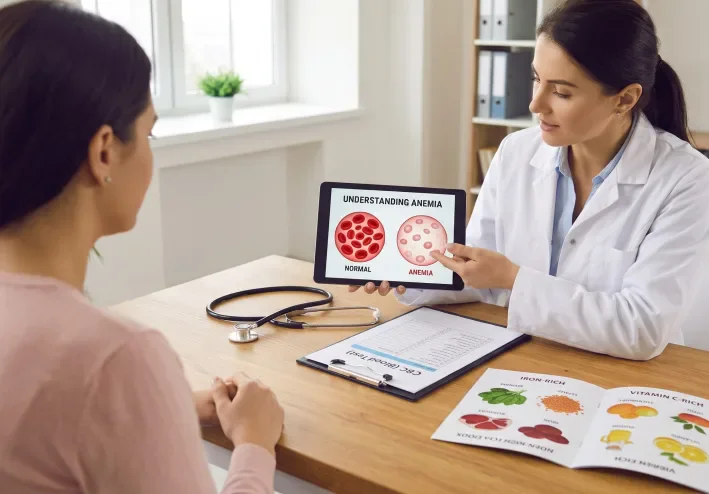
Your blood relies on specialized cells called red blood cells to carry oxygen from your lungs to the rest of your body. Anemia occurs when your body does not have enough healthy red blood cells, or when those cells do not contain enough of the oxygen-carrying protein needed to meet your body’s demands. Without enough oxygen reaching your tissues, your heart and lungs must work overtime, leaving you feeling drained, weak, and short of breath.
2. Decoding Complex Medical Terms in Simple English
Reading a blood test report or a medical article about anemia can feel overwhelming because of specialized terminology. Breaking down these common medical terms makes understanding your blood health straightforward:
* Erythrocytes (Red Blood Cells): Disc-shaped cells produced in the spongy tissue inside your bones (the bone marrow). Their primary job is to pick up oxygen in the lungs and deliver it throughout the body.
* Hemoglobin (Hb): An iron-rich protein inside red blood cells that acts like a magnet for oxygen. It also gives blood its bright red color. Low hemoglobin is the primary indicator of anemia.
* Hematocrit (Hct): The percentage of your total blood volume that is made up of red blood cells. If your hematocrit is low, it means your blood has a lower concentration of red blood cells than normal.
* Ferritin : A blood protein that acts as your body’s "iron savings account." While hemoglobin shows how much iron is currently circulating in your red blood cells, ferritin shows how much reserve iron is stored in your liver and tissues for future use.
* Mean Corpuscular Volume (MCV): A measurement of the average size of your red blood cells. Doctors use this value to classify anemia into three main categories:
* Microcytic Anemia: Red blood cells are smaller than normal (most commonly caused by iron deficiency or thalassemia).
* Macrocytic Anemia: Red blood cells are larger than normal (typically caused by a deficiency in Vitamin B12 or folate).
* Normocytic Anemia: Red blood cells are normal in size, but there are simply too few of them (often linked to chronic illnesses or sudden blood loss).
* Erythropoiesis: The biological factory process of creating new red blood cells inside the bone marrow.
* Hypoxia: A state in which body tissues are starved of adequate oxygen, which triggers most of the physical symptoms of anemia.
* Hemolysis: The premature breakdown or destruction of red blood cells before their normal lifespan of 120 days is complete.
3. Why Does Anemia Happen? Main Causes and Types
Anemia is not a single disease; rather, it is a sign that one of three fundamental problems is happening in the body: the body is not making enough red blood cells, the body is losing blood faster than it can replace it, or the body is destroying its own red blood cells.
|Category | Underlying Mechanism | Common Examples
| Nutritional Deficiencies | The bone marrow lacks the raw building blocks needed to manufacture hemoglobin and healthy red blood cells. | Iron-Deficiency Anemia (most common globally), Vitamin B12 Deficiency, and Folate (Vitamin B9) Deficiency. |
| Blood Loss | Red blood cells exit the body faster than the bone marrow can replenish them. | Heavy menstrual bleeding, hidden gastrointestinal bleeding (such as stomach ulcers or gastritis from overuse of painkillers), or trauma. |
| Chronic Inflammation | Long-term illness traps iron inside storage cells, preventing the bone marrow from using it effectively. | Anemia of Chronic Disease, seen in kidney disease, autoimmune disorders, or chronic infections. |
| Inherited or Hemolytic Conditions | Genetic mutations alter the shape or structure of hemoglobin, causing cells to break down early. | Sickle Cell Anemia, Thalassemia, and G6PD Deficiency (favism). |
4. How to Recognize Anemia Symptoms in Someone
Spotting anemia in a family member, friend, or colleague requires paying attention to both physical appearances and subtle changes in daily behavior. Because anemia often develops gradually, the person experiencing it may adjust to feeling tired and fail to notice the shift themselves.
Visible Physical Signs You Can Observe
* Pallor (Unusual Paleness): Look beyond general skin tone, which varies naturally. The most reliable places to spot pallor are the lower inner eyelids (conjunctiva), the lips, the gums, and the nail beds. In a healthy person, pressing gently on a fingernail turns it white, and the pink color returns immediately upon release. In someone with anemia, the nail bed may remain pale.
* Changes in the Nails (Koilonychia): Severe or long-standing iron deficiency can cause fingernails to become brittle, develop vertical ridges, or flatten and curve inward like a spoon.
* Mouth and Tongue Clues: Check for painful cracks at the corners of the mouth (angular cheilitis) or a tongue that looks unusually smooth, glossy, and swollen (glossitis), which frequently points to iron or Vitamin B12 deficiency.
* Jaundice (Yellowish Tint): If anemia is caused by the rapid breakdown of red blood cells (hemolysis), a faint yellow tint may appear in the whites of the eyes or on the skin.https://pin.it/3dWkHYizJ
Behavioral and Physical Clues to Watch For
* Unexplained Exhaustion and Low Stamina: The person seems drained after basic tasks, struggles to concentrate at work or school, or needs frequent naps despite sleeping well at night.
* Shortness of Breath on Mild Exertion (Dyspnea): You may notice them breathing heavily or pausing to catch their breath while walking at a normal pace or climbing a short staircase.
* Dizziness When Standing Up: If someone frequently grabs onto furniture or complains of lightheadedness and blurry vision when rising from a chair, their blood pressure and oxygen delivery may be struggling to keep up.
* Pica (Craving Non-Food Items): One of the most telling behavioral signs of iron-deficiency anemia is pica—an intense, unusual craving to chew on ice (pagophagia), raw starch, clay, or paper. If you notice someone constantly chewing ice cubes throughout the day, iron deficiency is a strong possibility.
* Cold Hands and Feet: When oxygen is scarce, the body prioritizes vital organs like the brain and heart, reducing blood flow to the extremities and leaving the hands and feet icy even in warm rooms.
5. Initial Treatments and First-Line Management
When anemia is suspected, taking the right initial steps ensures safe recovery and prevents complications.
Step 1: Confirm the Diagnosis Before Taking Supplements
Never start high-dose iron pills based on symptoms alone. Taking iron when you actually have a hereditary condition like Thalassemia can cause dangerous iron overload in your organs. A simple Complete Blood Count (CBC) paired with a Serum Ferritin test takes only minutes at a clinic and reveals the exact type of anemia.
Step 2: Targeted Oral Supplementation (When Prescribed)
* For Iron-Deficiency Anemia: Doctors typically prescribe oral iron salts (such as ferrous sulfate, ferrous fumarate, or gentle iron bisglycinate).
* Best Practice for Absorptmjion: Take iron on an empty stomach or with a source of Vitamin C (such as orange juice) to maximize absorption in the digestive tract. Many clinicians now recommend taking iron every other day rather than multiple times a day, which improves absorption and reduces stomach upset.
* Recovery Timeline: Energy levels often begin to improve within two weeks, and hemoglobin levels usually normalize within 6 to 8 weeks. However, continuing treatment for 3 to 6 months is essential to refill the body’s ferritin (iron storage) reserves.
* For Vitamin B12 or Folate Deficiency: Oral Vitamin B12 (cyanocobalamin or methylcobalamin) or folic acid tablets are used. If the person has trouble absorbing B12 in the stomach, intramuscular injections or sublingual (under-the-tongue) tablets may be given initially.
Step 3: Address the Underlying Cause
Supplements only refill the tank; if the tank has a leak, the anemia will return. Initial management must include stopping ongoing blood loss—such as treating stomach ulcers, stopping unnecessary nonsteroidal painkillers (like ibuprofen), or managing heavy menstrual cycles with a gynecologist.
Step 4: Know the Red Flags Requiring Immediate Medical Care
Seek urgent medical evaluation rather than waiting for dietary changes if someone experiences:
* Chest pain or a racing, irregular heartbeat (tachycardia) while resting.
* Fainting spells (syncope) or severe confusion.
* Black, tarry stools or blood in the stool (a sign of internal digestive bleeding).
6. Proven Prevention Strategies for Everyday Life
Preventing nutritional anemia relies on smart daily habits that boost the amount of micronutrients your body absorbs from food.
Prioritize Bioavailable Iron Sources
Dietary iron comes in two forms:
* Heme Iron (Animal Sources): Found in red meat, beef or chicken liver, poultry, and fish. The human body absorbs heme iron easily (up to 25 to 30 percent absorption).
* Non-Heme Iron (Plant Sources): Found in lentils, chickpeas, dark leafy greens (spinach, molokhia), blackstrap molasses, pumpkin seeds, and fortified grains. Non-heme iron has a lower absorption rate (2 to 10 percent), so it needs strategic pairing at mealtime.
Master the Art of Food Pairing
* Combine Iron with Vitamin C: Squeeze fresh lemon juice over leafy greens and lentil soup, or eat bell peppers, tomatoes, or citrus fruits alongside plant-based iron meals. Vitamin C converts plant iron into a form the gut absorbs up to three times more efficiently.
* Separate Tea, Coffee, and Dairy from Main Meals: Tea and coffee contain compounds called tannins and polyphenols, while milk and cheese contain high levels of calcium. Both bind to iron in the stomach and block its absorption by more than 50 percent. Enjoy your tea or coffee at least one to two hours before or after an iron-rich meal.
Include Vitamin B12 and Folate in Your Weekly Routine
* Folate (Vitamin B9): Eat dark green vegetables, beans, citrus fruits, and whole grains regularly. Because heat destroys folate easily, include fresh salads or lightly steamed greens in your meals.
* Vitamin B12: Found naturally almost exclusively in animal products such as eggs, dairy, meat, fish, and poultry. Individuals following a strict vegetarian or vegan diet should consume B12-fortified foods or take a regular B12 supplement.
Schedule Routine Screening for High-Risk Groups
Prevention also means catching falling iron stores before symptoms appear. Women of reproductive age, pregnant women, growing children, teenagers, and frequent blood donors benefit from checking their CBC and ferritin levels once a year.
Maintaining healthy blood does not require complicated medical routines. By understanding the basic signals your body sends, recognizing subtle signs of fatigue or pallor in the people you care about, and making simple adjustments to how you pair everyday foods and beverages, you can keep your energy levels strong and prevent nutritional anemia before it starts.
References and Medical Sources
American Society of Hematology. (2024). Iron-deficiency anemia: Symptoms, diagnosis, and management. Blood Health Guidelines.
Camaschella, C. (2019). Iron deficiency. Blood, The Journal of the American Society of Hematology, 133(1), 30–39.
Cleveland Clinic Medical Professional. (2024). Anemia: Overview, types, causes, symptoms, and treatment. Cleveland Clinic Health Library.
Mayo Clinic Staff. (2024). Anemia: Comprehensive guide to clinical signs and initial treatments. Mayo Foundation for Medical Education and Research.
National Heart, Lung, and Blood Institute. (2023). What is anemia? Red blood cell indices and classification. U.S. Department of Health and Human Services, National Institutes of Health.
Verifiable References and Clinical Sources
World Health Organization (WHO). (2023). Anaemia: Key Facts, Global Prevalence, Causes, and Prevention Guidelines. Geneva: World Health Organization, Global Health Observatory Data. (Verifiable via WHO Official Fact Sheets Archive).
Camaschella, C. (2015). Iron-deficiency anemia. The New England Journal of Medicine (NEJM), 372(19), 1832–1843. DOI: 10.1056/NEJMra1401038 | PubMed ID (PMID): 25946282.
Camaschella, C. (2019). Iron deficiency. Blood (Journal of the American Society of Hematology), 133(1), 30–39. DOI: 10.1182/blood-2018-05-815944 | PubMed ID (PMID): 30401704.
Stoffel, N. U., Cercamondi, C. I., Brittenham, G., Zeder, C., Geurts-Moespot, A. J., Swinkels, D. W., Moretti, D., & Zimmermann, M. B. (2017). Iron absorption from oral iron supplements given on consecutive versus alternate days and as single morning doses versus twice-daily split dosing in iron-depleted women: two open-label, randomised controlled trials. The Lancet Haematology, 4(11), e524–e533. DOI: 10.1016/S2352-3026(17)30182-5 | PubMed ID (PMID): 29032957.
DeLoughery, T. G., Jackson, C. S., Ko, C. W., & Rockey, D. C. (2024). AGA Clinical Practice Update on Management of Iron Deficiency Anemia: Expert Review. Clinical Gastroenterology and Hepatology, 22(8), 1575–1583. DOI: 10.1016/j.cgh.2024.03.046 | PubMed ID (PMID): 38864782.
Ko, C. W., Siddique, S. M., Patel, A., Harris, A., Sultan, S., Altayar, O., & Falck-Ytter, Y. (2020). AGA Clinical Practice Guidelines on the Gastrointestinal Evaluation of Iron Deficiency Anemia. Gastroenterology, 159(3), 1085–1094. DOI: 10.1053/j.gastro.2020.06.046 | PubMed ID (PMID): 32810434.
Green, R., Allen, L. H., Bjørke-Monsen, A. L., Brito, A., Guéant, J. L., Miller, J. W., et al. (2017). Vitamin B12 deficiency. Nature Reviews Disease Primers, 3, 17040. DOI: 10.1038/nrdp.2017.40 | PubMed ID (PMID): 28660890.
National Institutes of Health (NIH) – Office of Dietary Supplements (ODS). (2024). Iron and Vitamin B12 Fact Sheets for Health Professionals: Dietary Bioavailability, Heme vs. Non-Heme Iron, and Drug-Nutrient Interactions. Bethesda, MD: U.S. Department of Health and Human Services.
ملا
World Heath Organization. (2023). Anaemia: Key facts, global burden, and nutritional prevention strategies. WHO Media Centre.
تابع جديد Omar Abdou Deabies
اختر إشعارات الموقع أو البريد أو الاثنين. الزائر يقدر يشترك ببريده دون تسجيل حساب.
الإبلاغ عن المقال
لو لاحظت مشكلة في المحتوى، أرسلها لفريق المراجعة. لن تظهر بياناتك لكاتب المقال أو للقراء.
تعذّر إرسال البلاغ الآن. حاول مرة أخرى لاحقًا.
سجّل الدخول لإرسال بلاغ







النقاش
التعليقات (0)
فكرة تضيفها، أو سؤال يفتح حوارًا.
الرجاء تسجيل الدخول لتتمكن من التعليق