

In this article
Saving money on groceries does not mean eating boring meals or giving up your favorite foods. Grocery prices can add up quickly, especially when shopping without a plan. The key is to make smart choices before and during every shopping trip.
10 Easy Ways to Save Money on Groceries in 2026
1. Make a Weekly Grocery List
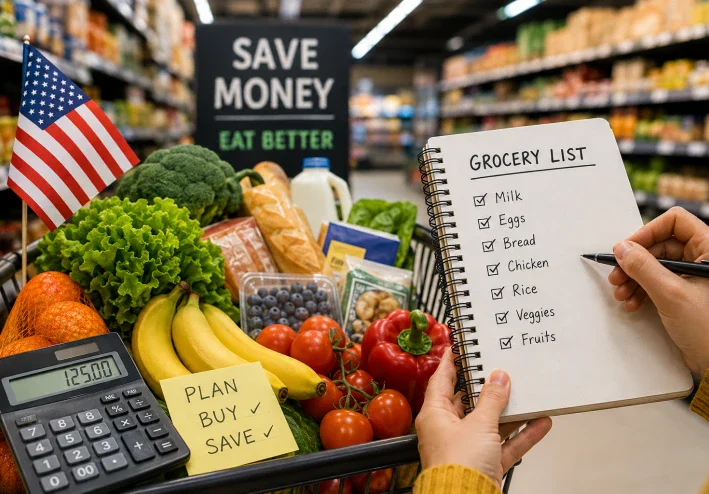
Before going to the store, check your refrigerator, freezer, and pantry. Write down only the items you need. Organize the list by sections, such as produce, dairy, meat, and household items.
2. Plan Your Meals
Choose several meals for the week before shopping. Buy ingredients that can be used in more than one recipe. For example, chicken can be used for sandwiches, salads, tacos, or dinner.
3. Compare Store Prices
Do not assume that one store always has the lowest prices. Compare weekly deals from supermarkets in your area and check digital coupons. Some stores may offer better prices on meat, vegetables, or household products.
4. Choose Store Brands
Store-brand products are often cheaper than national brands while offering similar quality. Try store-brand pasta, rice, canned vegetables, cereal, milk, and cleaning products.
5. Use Coupons and Rewards
Many American grocery stores offer digital coupons, loyalty programs, and weekly discounts. Before shopping, check the store’s app or website for available deals. Use coupons for products you actually need. A discount is not a saving if it makes you buy something outside your budget.
6. Buy Seasonal Produce
Fresh fruits and vegetables can cost more when they are out of season. Also compare fresh, frozen, and canned options. Frozen vegetables can be useful for quick meals and usually last much longer.
7. Avoid Shopping Hungry
Shopping while hungry can make it harder to follow your list. Eat a small meal or snack before visiting the store, then focus on the list you prepared.
8. Reduce Food Waste
Using the food you already have is one of the easiest ways to save money. Store leftovers properly, freeze food before it spoils, and check expiration dates regularly.
9. Buy in Bulk Carefully
Bulk purchases can save money when you will actually use the product. Compare the unit price instead of only the package price. Bulk buying can work well for rice, pasta, toiletries, and other products with a long shelf life. Avoid large amounts of fresh food if it may spoil.
10. Set a Grocery Budget
Choose a realistic weekly or monthly grocery budget and track your spending. You do not need extreme changes. Even saving $20 to $30 per week can become significant over a year.
Saving money on groceries is mainly about planning, comparing prices, and reducing waste. Start with two or three tips this week and add more as they become habits. Small changes can help you keep more money in your pocket without sacrificing good food. The goal is not perfection, but building simple habits that make your grocery budget easier to manage every month without extra financial stress today for your family.![]()
Keep up with Hatem Sherif
Choose site notifications, email, or both. Guests can subscribe by email without an account.
Report this article
Tell our review team about a problem with this content. Your details will not be shown to the author or other readers.
Your report could not be sent. Please try again later.
Sign in to report an article










Discussion
comments (0)
Share a perspective. Start a thoughtful conversation.
please login to be able to comment