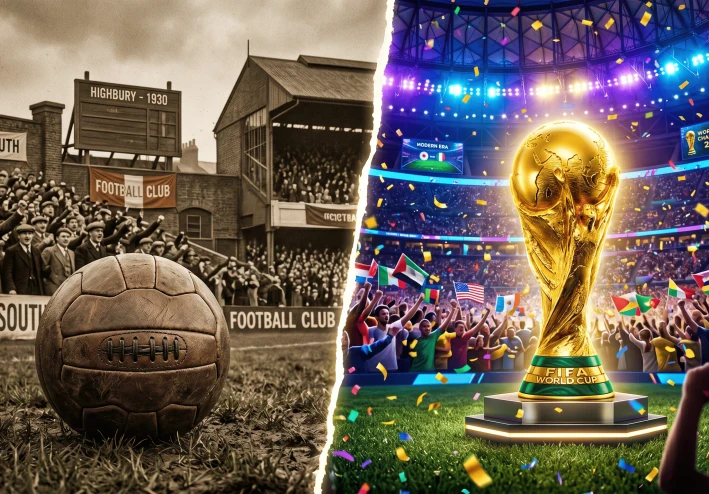
The Epic of the Beautiful Game: A Journey Through World Cup History from Uruguay to Global Glory
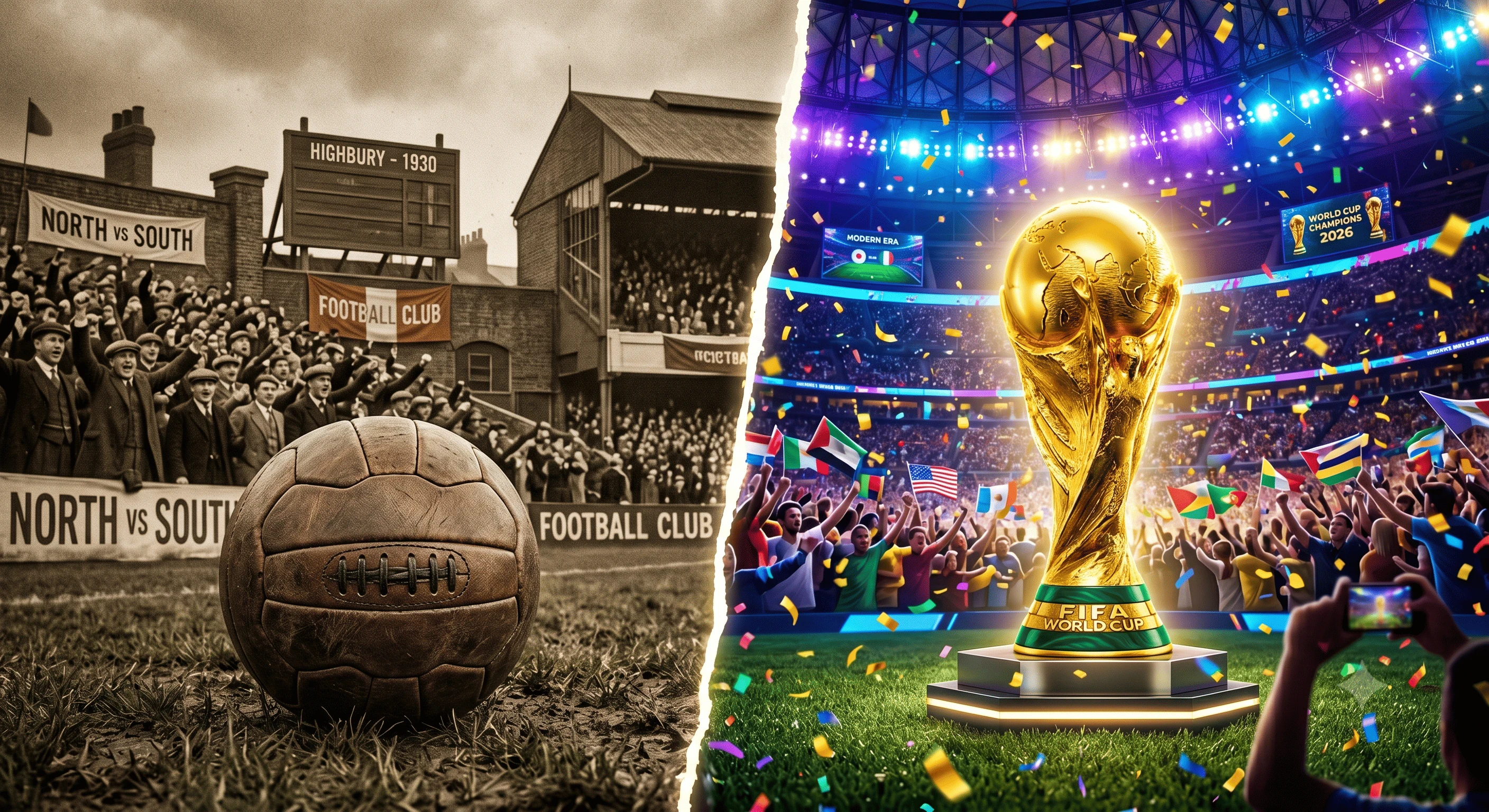
The Epic of the Beautiful Game: A Journey Through World Cup History from Uruguay to Global Glory
Football is a universal language that transcends the boundaries of geography and politics, and no stage embodies this truth more brilliantly than the FIFA World Cup. It is not merely a sporting competition held every four years; it is a cultural and historical phenomenon that stops the clock, gathers billions of humans around television screens and in stadiums, and creates sporting legends whose tales are told to successive generations.
The Spark of the Beginning and Jules Rimet's Dream
The story began in the early 20th century when the International Association Football Federation (FIFA) realized the urgent need to organize a global tournament for professionals, separate from the Olympic Games, which were then restricted strictly to amateur players. The greatest credit for turning this bold dream into a tangible reality goes to the French lawyer Jules Rimet, the FIFA president at the time. Thanks to his vision and sheer determination, the first edition of the World Cup was launched in 1930 in Uruguay, celebrating the centenary of its independence and recognizing it as the back-to-back Olympic champion. Only 13 national teams participated in that inaugural edition, and Uruguay was crowned with the very first title, writing the opening line in an exhilarating book of football history.
Early Challenges and the Obstacle of War
In its early days, the tournament faced massive logistical and political challenges. Traveling across oceans was grueling, expensive, and took weeks, leading to the absence of many major European teams from the first edition. In turn, South America retaliated by boycotting some of the subsequent European editions. Despite the great success of the Italy 1934 and France 1938 tournaments, the wheels of the competition were forcibly halted by the outbreak of World War II. The sun set on the World Cup for 12 long years, only to return in 1950 with the Brazilian edition. This tournament witnessed the dramatic historical event known as the "Maracanazo," where Uruguay shocked the world by snatching the title away from the host nation, Brazil, amidst an attendance approaching an incredible 200,000 passionate fans at the Maracanã Stadium.
The Golden Age and the Birth of Legends
The 1950s, 60s, and 70s formed a golden age that firmly cemented the tournament's popularity and made it the undisputed premier global event. Brazil emerged as an invincible superpower, led by the Black Pearl, Pelé, who contributed to his country winning three titles (1958, 1962, 1970), allowing the Brazilians to keep the original Jules Rimet Trophy forever. However, the brilliance was not limited to South America; Europe proved its dominance and power through major teams like West Germany, known for its absolute resilience, England, which achieved its only title on home soil in 1966, and the Netherlands, which thoroughly entertained the world with "Total Football" despite never winning the ultimate title.
The Modern Era and Global Expansion
Entering the 1980s, the tournament took on a much more modern, professional, and commercial character. FIFA gradually increased the number of participating teams to ensure broader representation for various continents across the globe. This period witnessed the undeniable brilliance of exceptional legends, topped by the Argentine icon Diego Armando Maradona, who single-handedly led his country to glory in 1986 with his magical touches and immortal goals. With the dawn of the new millennium, the tournament headed towards entirely new geographical horizons. It was held for the first time in Asia with joint hosting (South Korea and Japan 2002), then landed on the African continent (South Africa 2010), confirming the tournament's true and undeniable "global" status.
The Last Decade and the Future of the Tournament
Recent editions have witnessed massive technological advancements that revolutionized the laws of the game, such as goal-line technology and the Video Assistant Referee (VAR), aiming to reduce refereeing errors and bring a higher level of fairness to the pitch. The tournament also continued to deliver massive surprises and historical moments, most notably when the Middle East hosted the tournament for the very first time in Qatar in 2022. This was an exceptional edition that saw the living legend Lionel Messi finally crowned with the precious title. Now, as we are in the year 2026, the eyes of the entire world are turning towards the first edition held with joint organization between three massive countries (the United States, Canada, and Mexico) and featuring 48 national teams for the first time, beautifully reflecting the continuous expansion and exponential growth of this beloved sport's popularity.
In conclusion, the history of the World Cup remains a vibrant record full of drama, tears, joy, and endless surprises. It stands alone as the only tournament truly capable of uniting humanity, constantly reminding us that despite our differences, we all share a deep, unwavering love for the beautiful game.