The Internet in Egypt: Infrastructure, Challenges, and the Importance of Open Communication”
🌍 The Internet in Egypt and the Arab World: Infrastructure, Challenges, and the Importance of Stable Connectivity
In this comprehensive article, we explore the state of the Internet in Egypt and the Arab world — from how networks and submarine cables operate to the key technical and regulatory challenges facing the region. Learn how connectivity issues impact clinics and businesses, the potential financial risks, and practical solutions to ensure stable and uninterrupted operations.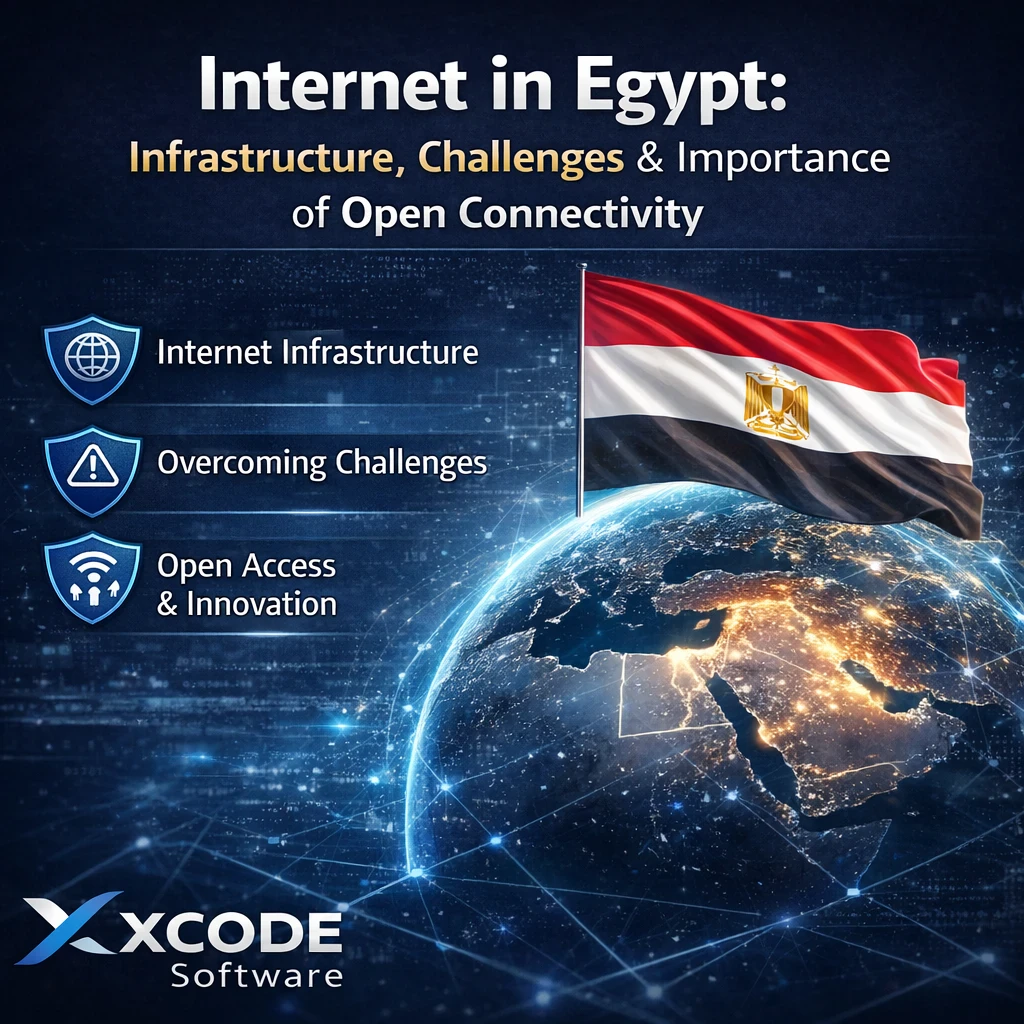
In the era of digital transformation, the Internet has become the lifeline of businesses, clinics, and services. 📡
But what happens when that lifeline is cut off or its speed is limited?
In this comprehensive report from the xclinic team, we reveal how the Internet works from A to Z, the challenges facing the region, and why a stable connection means the success of your clinic.
📊 Digital Facts:
Egypt ranks 70th globally in internet speed (average 15 Mbps)
98% of global internet traffic passes through submarine cables
Internet outages cost the Egyptian economy millions of dollars daily
85% of patients prefer digitally connected clinics
🔧 Part One: How Does the Internet Work? The Journey of Data from Your Device to the World
📍 Stage 1: From Your Device to the Router
When you type a website address in your browser:
Your device sends a DNS (Domain Name System) request to find the server’s IP address
The router receives the request and forwards it to the Internet Service Provider (ISP)
The domain (like google.com) is converted into an IP address (like 142.250.185.78)
📍 Stage 2: Through the Internet Service Provider (ISP)
In Egypt, the main providers include:
📡 WE (Telecom Egypt): The primary infrastructure owner, controlling most land cables
📡 Vodafone Egypt: A growing fiber-optic network
📡 Orange & Etisalat: Mobile and fixed networks
📍 Stage 3: Submarine Cables – The Arteries of the Global Internet
🌊 Cables passing through Egypt:
🔵 SEA-ME-WE 3, 4, 5
South East Asia - Middle East - Western Europe
Capacity: 24–36 Tbps
🔵 FLAG Europe-Asia
One of the oldest cables, connecting Europe to Asia via the Red Sea
🔵 TE North
An Egyptian cable linking Europe and the Middle East
🔵 2Africa
The longest cable in the world (45,000 km) – under construction
⚠️ Important Note: Egypt is a strategic transit hub. Any damage to these cables affects internet connectivity across the Middle East and Africa.
📍 Stage 4: Data Centers
What happens inside data centers?
🖥️ Servers: Store websites and applications
🔄 Routers and switches: Direct data traffic
🔒 Security systems: Firewalls and intrusion detection systems
❄️ Cooling systems: Maintain optimal temperature (18–27°C)
⚡ Backup generators: Ensure 24/7 operational continuity
⚠️ Part Two: Challenges Facing the Internet in Egypt
🚫 Technical Challenges:
Aging infrastructure: Some areas still rely on copper lines instead of fiber optics
Network congestion: Growing user numbers without parallel infrastructure upgrades
Dependence on limited cables: Most traffic passes through 3–4 main cables
Limited local data centers: Heavy reliance on external servers in Europe and the US
🔒 Regulatory Challenges:
Bandwidth management: Prioritizing certain traffic during peak hours
Content filtering: Blocking certain websites for security or political reasons
Social media restrictions: Limited access to platforms at certain times
Business impact: Clinics and companies lose the ability to communicate with clients
📉 Impact on Medical Clinics:
| Problem | Direct Impact | Expected Loss |
|---|---|---|
| Internet outage | Booking system stops | 500–2000 EGP/day |
| Slow speed | Delayed access to patient files | Lost time + patient frustration |
| Blocked social platforms | Inability to market | Loss of new patients |
💡 Part Three: Practical Solutions for Clinics Amid These Challenges
🚀 Strategies to Ensure Business Continuity:
✅ Backup connection: Subscribe to two different ISPs (e.g., WE + Vodafone)
✅ Offline-First system: xclinic operates without internet and syncs data when reconnected
✅ Cloud backup: Save data across multiple platforms (Google Drive + OneDrive)
✅ 4G/5G backup: Use a mobile router with SIM cards as an emergency plan
✅ Local storage: Keep a local copy of patient data on an internal server
🛠️ Free Tools to Improve Your Connection:
📊 Speedtest by Ookla
Test your internet speed and diagnose connectivity issues
🔍 DNS Benchmark
Identify the fastest DNS server to improve browsing speed
📡 Cloudflare 1.1.1.1
A faster and more secure DNS alternative to local providers
🔄 Google Takeout
Export your data from cloud services as a backup copy
🔮 The Future of the Internet in Egypt: What to Expect?
📈 Positive Developments:
✅ Digital Egypt Project: Transforming government services online
✅ Fiber expansion: Plan to reach 80% of homes by 2027
✅ Local data centers: Investments from Google, Amazon, and Microsoft
✅ 5G network: Ongoing trials to launch fifth-generation services