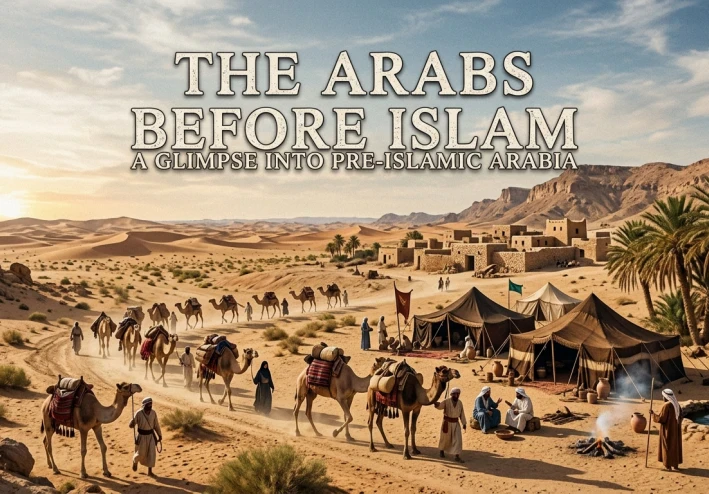
The Arabs before Islam
The Arabs Before Islam
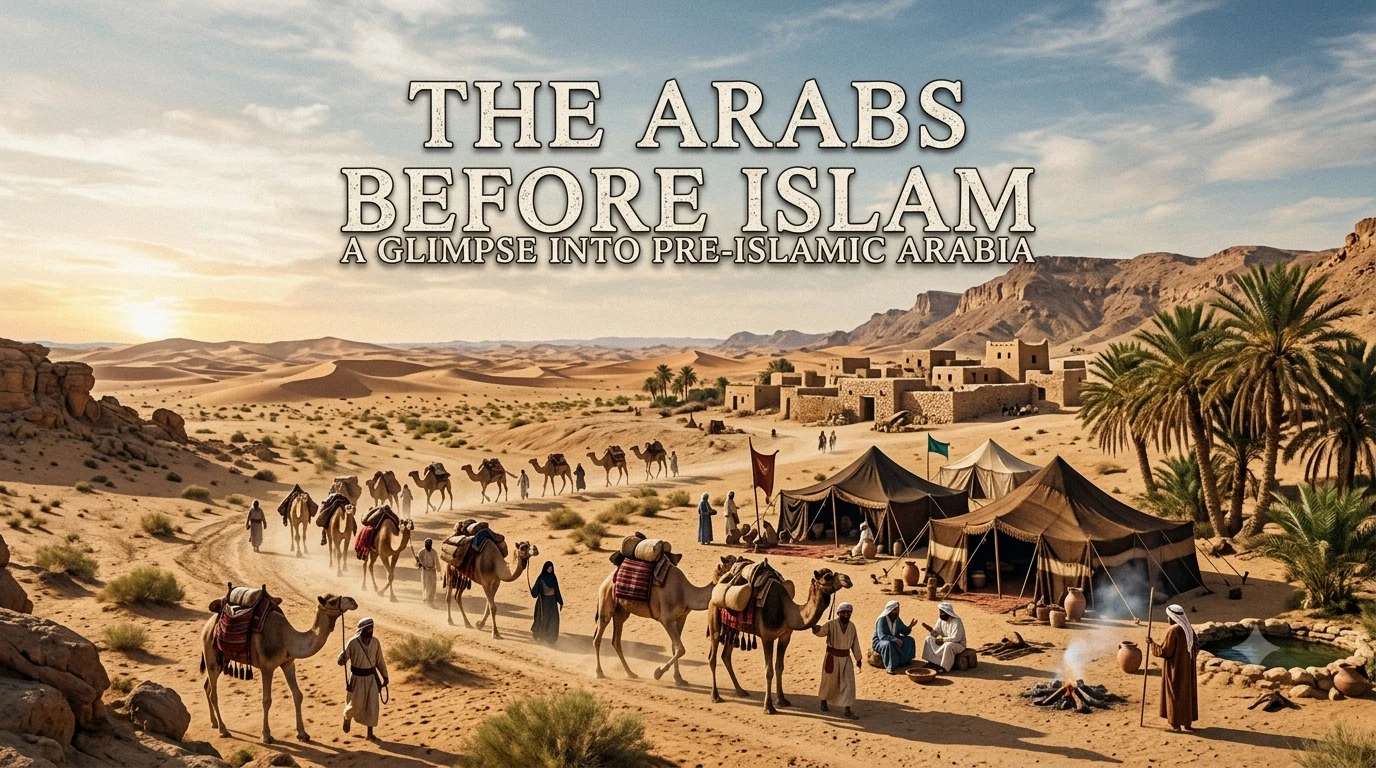
Before the advent of Islam in the seventh century, the Arabian Peninsula was home to many tribes that lived in deserts, towns, and trading centers. Arabian society was largely tribal, and people were deeply loyal to their tribes. A person's tribe provided protection, identity, and support. However, tribal loyalty often led to conflicts and long-lasting wars between different groups.
The economy of Arabia depended mainly on trade, agriculture, and animal herding. Merchants traveled across vast distances, connecting Arabia with neighboring regions such as Syria, Iraq, and Yemen. Mecca was one of the most important commercial centers because of its strategic location on major trade routes. Markets were not only places for buying and selling goods but also centers of social and cultural exchange.
Religion in pre-Islamic Arabia was diverse. Most Arabs practiced polytheism and worshipped many idols. Numerous tribes had their own gods and religious customs. The Kaaba in Mecca contained many idols and was considered a sacred place by different tribes. At the same time, some people followed Judaism, Christianity, or other monotheistic beliefs.
Despite certain social problems, the Arabs possessed many admirable qualities. They were known for their generosity, courage, hospitality, and loyalty. Guests were often treated with great respect, and helping travelers was considered a noble duty. Poetry held a special place in Arab culture, and skilled poets enjoyed high status in society. Poetry was used to celebrate achievements, preserve history, and express emotions. Public poetry competitions were popular and contributed to the richness of the Arabic language.
However, pre-Islamic society also faced several challenges. Tribal warfare was common, and disputes could continue for many years. Social inequality existed, and weaker members of society sometimes lacked protection. Women’s rights varied among tribes, but in some areas women were treated unfairly and had limited opportunities. Practices such as gambling and excessive drinking were also widespread in certain communities.
The period before Islam is often referred to as the Age of Jahiliyyah, a term that describes a state of ignorance of divine guidance rather than a lack of intelligence or culture. Although the Arabs had developed traditions, language, and commerce, many aspects of society needed reform.
With the arrival of Islam through the Prophet Muhammad (May Allah's peace and blessings be upon him), significant changes took place. Islam emphasized justice, equality, compassion, and moral responsibility. It encouraged the worship of one God and sought to unite the tribes under shared religious and ethical principles. These changes transformed Arabian society and had a lasting impact on world history.