
In this article
The North and South Poles: Secrets Beneath the Ice, Myths, and Scientific Facts
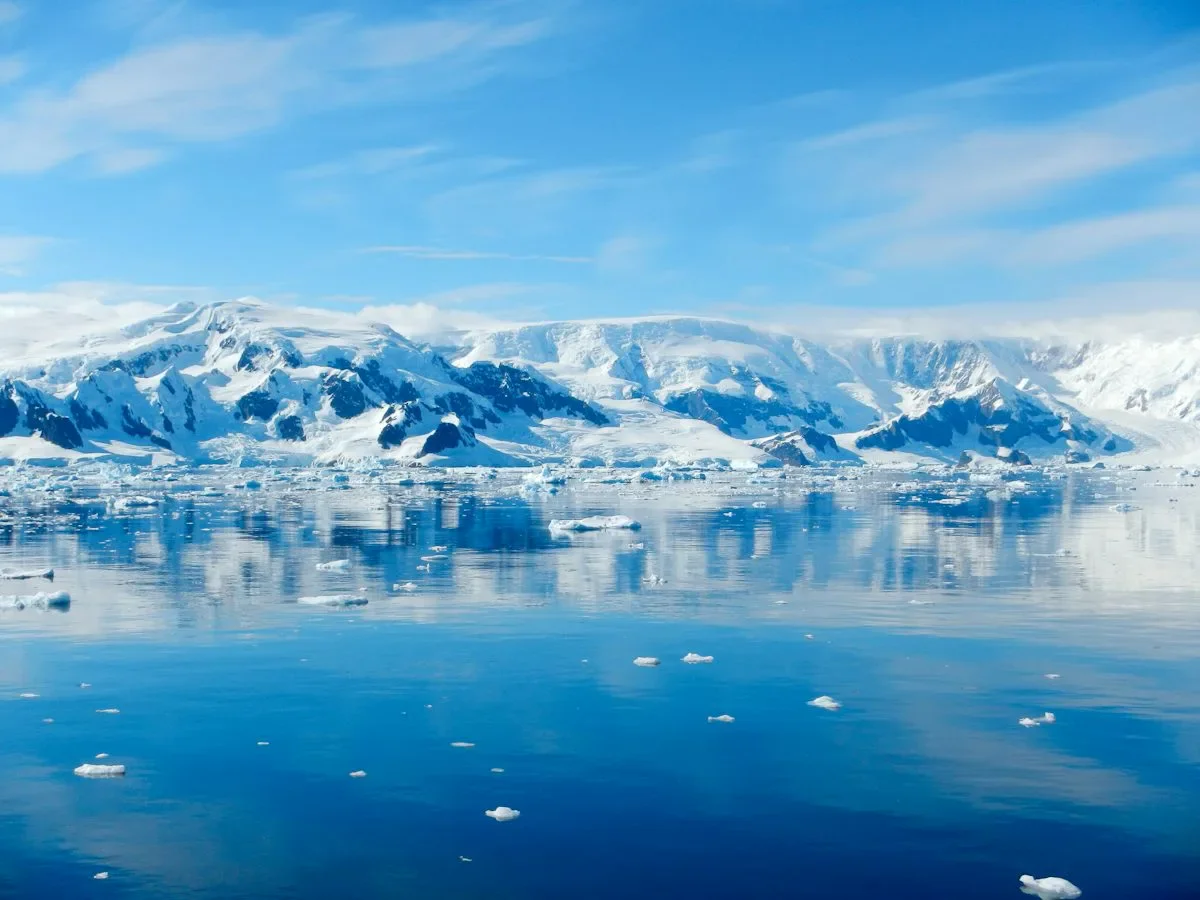
Imagine reaching one of the most remote places on Earth.
No cities. No roads. Almost no sound.
Only endless ice, an unfamiliar sky, and a Sun that can remain visible for weeks or even months.
Yet the most interesting part of the polar regions may be hidden beneath the surface.
Under Antarctica's enormous ice sheet are mountains, valleys, lakes, and complex ecosystems. At the same time, stories have spread about giant ice walls, secret bases, hidden continents, and unknown civilizations.
So what is actually true?
Let's separate the scientific facts from the myths.
The North Pole Is Not a Continent
The geographic North Pole is located in the **Arctic Ocean**, not on a continent.
Sea ice covers the ocean around the North Pole, but that ice changes throughout the year.
The situation is completely different at the other end of the planet.
The South Pole is located on **Antarctica**, a real continent covered by a massive ice sheet.
Beneath that ice are solid rock, mountains, valleys, and large areas of land that cannot be seen from the surface.
Why Doesn't the Sun Set for Months?
Near the poles, daylight and darkness can last for unusually long periods.
This happens because Earth's axis is tilted as the planet moves around the Sun.
At the poles, the Sun can remain above the horizon for several months before disappearing for another extended period.
The popular expression “six months of daylight and six months of darkness” is a simplified description. The exact duration depends on location and other factors, including atmospheric refraction.
Antarctica Is More Extreme Than It Looks
Antarctica is the coldest continent on Earth.
At Vostok Station, scientists recorded **−89.2°C (−128.6°F) on July 21, 1983**. The World Meteorological Organization recognizes this as the lowest officially recorded surface temperature measured at a ground station.
Antarctica's extreme cold is caused by several factors, including its high elevation, dry atmosphere, clear skies, and the loss of heat through radiation.
Despite its appearance, however, Antarctica is not simply a frozen, lifeless land.
Much of its most interesting geography is hidden below the ice.
An Entire Landscape Beneath the Ice
Antarctica's ice sheet covers a landscape containing mountains, valleys, basins, and other geological features.
Scientists map this hidden terrain using radar, aircraft surveys, satellites, and other geophysical techniques.
The **Bedmap3** project combines large amounts of scientific data to produce detailed maps of Antarctica's bed beneath the ice. These maps include information about ice thickness, elevations, subglacial lakes, and drainage systems.
The result is surprising: Antarctica is not a flat block of ice.
It is a continent with a complex landscape hidden underneath.
Hidden Lakes Beneath Antarctica
Scientists have identified **hundreds of subglacial lakes and water systems** beneath Antarctica's ice.
One of the best-known examples is **Lake Vostok**, a huge lake buried beneath the ice in East Antarctica.
How can liquid water exist beneath kilometers of ice?
Pressure, geothermal heat from Earth's interior, and the insulating effect of the ice can create conditions where water remains liquid.
These environments are scientifically important because they may support microorganisms adapted to extreme conditions.
Can Life Exist Beneath the Ice?
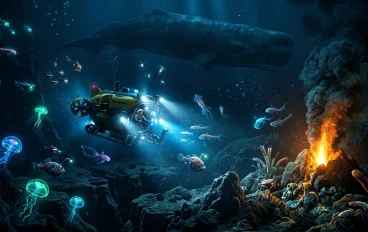
Scientists have found evidence of **microbial life in Antarctic subglacial environments**.
Some microorganisms can survive without sunlight and obtain energy through chemical reactions.
This does not mean that scientists have discovered monsters, complex animals, or civilizations beneath the ice.
It also does not prove that complex life exists inside Lake Vostok.
The evidence supports something much more specific: microscopic life can survive in some extremely cold, dark environments.
The Ice Wall: Fact or Fiction?
Large Antarctic ice shelves and ice cliffs are real.
From certain angles, they can look like enormous walls.
This has helped inspire the claim that a giant ice wall surrounds the world and hides unknown lands beyond Antarctica.
There is no reliable scientific evidence for such a world-encircling wall or for secret continents beyond Antarctica.
Antarctica has been extensively mapped using satellites, aircraft, radar, and other scientific methods.
The continent still contains unanswered scientific questions, but those questions are not evidence of a hidden world.
What Scientists Still Don't Know
Knowing a great deal about Antarctica does not mean knowing everything.
Scientists continue to study the movement of water beneath the ice, subglacial ecosystems, geological processes, and changes in the ice sheet.
Some areas are difficult to access, and some processes are difficult to observe directly.
This is a genuine scientific unknown.
It is very different from claiming that an undiscovered civilization is hiding beneath the ice.
Antarctica Has Active Volcanoes
A frozen continent might seem like the last place to expect an active volcano.
Yet Antarctica has volcanic activity.
One of the most famous examples is **Mount Erebus**, an active volcano on Ross Island.
The Smithsonian Global Volcanism Program records an active lava lake at Erebus.
This is a reminder that Antarctica is not geologically inactive. Beneath the ice, Earth's internal heat continues to shape the continent.
Why Are There No Polar Bears with Penguins?
Polar bears and penguins do not naturally meet because they live in different parts of the world.
Polar bears are native to the **Arctic**, while wild penguins are found mainly in the **Southern Hemisphere**.
So an image showing a polar bear and a penguin together is not a natural scene from either polar region.
The two poles are geographically and ecologically very different.
Antarctica Is a Desert
The word “desert” usually makes people think of sand.
Scientifically, however, a desert is defined mainly by very low precipitation.
Antarctica receives extremely little precipitation, which makes it a **polar desert**.
So Antarctica combines several unusual characteristics:
It is the coldest continent.
It is also one of the driest environments on Earth.
Yet beneath its ice are large amounts of liquid water.
Some of those environments can support microbial life.
Geographic Pole vs. Magnetic Pole
Another common misunderstanding involves Earth's poles.
The **geographic poles** are determined by Earth's rotational axis.
The **magnetic poles** are related to Earth's magnetic field.
They are not located in exactly the same places.
The magnetic poles also move over time, which is why a compass does not simply point toward the geographic North Pole.
Is Antarctica Forbidden?
Antarctica is not completely forbidden.
Scientific research stations operate there, and tourists can visit parts of the continent under regulated conditions.
However, activities in Antarctica are subject to environmental rules and international agreements, including the Antarctic Treaty System.
Visitors must follow rules designed to protect the environment and reduce human impact.
So there are serious restrictions, but there is no complete ban on entering Antarctica.
Are There Secret Bases or Hidden Civilizations?
There are real research stations across Antarctica.
Their existence is publicly documented.
Stories about secret cities, hidden civilizations, underground gateways, or unknown giant creatures are different claims.
So far, there is **no reliable scientific or archaeological evidence** proving that such civilizations or creatures exist beneath the Antarctic ice.
An unexplored area is not automatically evidence of something extraordinary.
The Nazi Antarctica Expedition
There is a real historical event behind some of the stories about secret Nazi activity in Antarctica.
Nazi Germany sent an Antarctic expedition in the **1930s**.
The expedition is historically documented.
Later stories claimed that Germany built secret underground bases in Antarctica and continued mysterious activities there after World War II.
However, the documented expedition itself does not provide evidence for those later claims.
The historical fact and the conspiracy story should therefore be kept separate.
What Is Happening to the Polar Ice?
Modern satellites allow scientists to monitor polar sea ice continuously.
The Arctic has experienced substantial long-term changes in sea-ice extent.
On **September 12, 2026**, the Arctic annual sea-ice minimum was estimated at approximately **4.60 million square kilometers**. The National Snow and Ice Data Center described it as the **tenth-lowest minimum in the satellite record at the time**, with the result still considered preliminary.
Antarctic sea ice behaves differently from Arctic sea ice and can vary significantly from one year to another.
This difference is important: the Arctic and Antarctic should not be treated as if they respond to environmental changes in exactly the same way.
What If All Antarctic Ice Melted?
This is a hypothetical long-term scenario, not an event expected to happen suddenly.
If the entire **Antarctic continental ice sheet** melted, global mean sea level could eventually rise by approximately **58 meters (190 feet)**.
There is an important distinction between continental ice and floating sea ice.
Ice sitting on land adds water to the ocean when it melts.
Floating sea ice is already displacing seawater, so its direct effect on global sea level is very different.
Fact or Myth?
| Claim | Reality |
| ------------------------------------------------------------- | ----------------------- |
| The North Pole is a continent | ❌ False |
| The North Pole is over the Arctic Ocean | ✅ True |
| The South Pole is on a continent | ✅ True |
| Lakes exist beneath Antarctic ice | ✅ True |
| Microbial life can exist in subglacial environments | ✅ Supported by evidence |
| Complex life has been proven inside Lake Vostok | ❌ Not established |
| Antarctica has active volcanoes | ✅ True |
| Antarctica is a desert | ✅ True |
| A giant wall surrounds the world | ❌ No reliable evidence |
| Secret continents exist beyond Antarctica | ❌ No reliable evidence |
| Hidden civilizations have been discovered beneath Antarctica | ❌ No reliable evidence |
| Antarctica is completely forbidden | ❌ False |
| Antarctic tourism is regulated | ✅ True |
| The magnetic and geographic poles are identical | ❌ False |
| Scientists are still studying Antarctica's hidden environment | ✅ True |
The Truth May Be Stranger Than the Myths
After separating the evidence from the stories, Antarctica remains fascinating without the need for a hidden civilization or a mysterious world beyond an ice wall.
Beneath its ice are enormous landscapes.
There are lakes hidden from direct sunlight.
Some extreme environments can support microscopic life.
Active volcanoes exist on the continent.
And scientists continue to discover new information about how the ice, water, geology, and ecosystems interact.
The real mystery is not whether Antarctica hides a secret civilization.
The real mystery is how much we can still learn about a continent that remains difficult to explore.
Where Is the Evidence?
That question is useful whenever you encounter an extraordinary story about the polar regions.
A photograph can be real while the explanation attached to it is false.
A historical event can be documented while later stories about it remain unproven.
And an unknown scientific process does not automatically become evidence for a supernatural or secret explanation.
The difference between fact and myth is ultimately the quality of the evidence.
**Antarctica does not need invented mysteries to be extraordinary. The science is already fascinating.**
Scientific Sources
* **World Meteorological Organization (WMO)** — Official information on the lowest recorded temperature on Earth.
* **British Antarctic Survey (BAS)** — Bedmap3 and mapping of Antarctica's subglacial landscape.
* **National Snow and Ice Data Center (NSIDC)** — Arctic and Antarctic sea-ice data.
* **Smithsonian Global Volcanism Program** — Scientific information about Mount Erebus and Antarctic volcanism.
* **Antarctic Treaty Secretariat** — Information about the Antarctic Treaty System, tourism, and environmental regulations.
* **NASA Sea Level Change** — Information about Antarctic ice and potential sea-level rise.
**Conclusion:** Antarctica is a place where fact is already stranger than fiction. Its hidden lakes, extreme environments, active volcanoes, and constantly changing ice provide real scientific mysteries—without needing unsupported stories to make the continent extraordinary.
Keep up with زياد الريدي
Choose site notifications, email, or both. Guests can subscribe by email without an account.
Report this article
Tell our review team about a problem with this content. Your details will not be shown to the author or other readers.
Your report could not be sent. Please try again later.
Sign in to report an article






Discussion
comments (0)
Share a perspective. Start a thoughtful conversation.
please login to be able to comment