
في هذا المقال
Ceuta:Is It Moroccan or Spanish? History, Geography, and the Sovereignty Dispute
Introduction
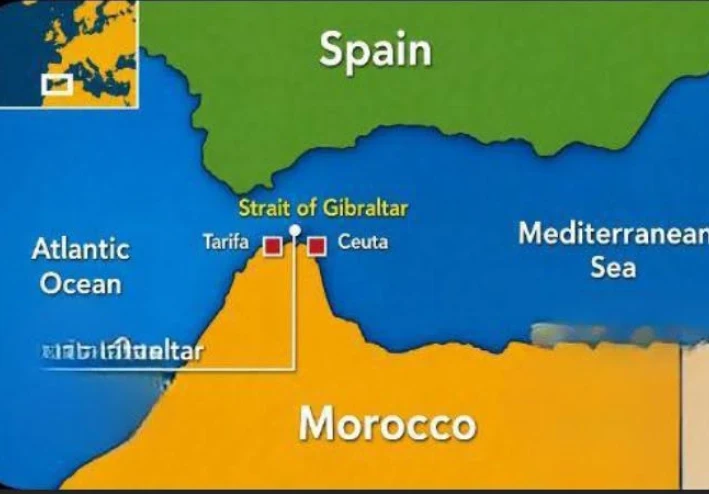
Ceuta is one of the most strategically important and politically debated territories in the Mediterranean region. Located on the northern coast of Africa at the entrance to the Strait of Gibraltar, the city is administered by Spain while being claimed by Morocco as part of its national territory. This long-standing disagreement has made Ceuta a significant topic in discussions of geography, history, and international relations.
?Where Is Ceuta Located
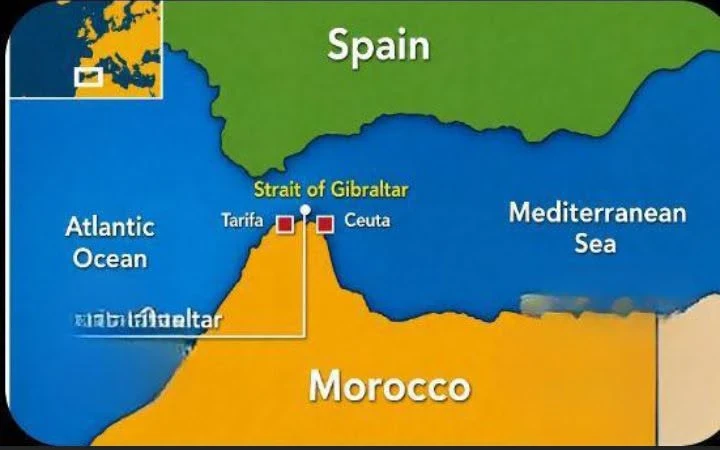
Ceuta occupies an area of approximately 18.5 square kilometers on the northern coast of Africa. It shares its only land border with the Kingdom of Morocco to the south, while its northern shoreline faces the Mediterranean Sea
Its position next to the Strait of Gibraltar gives the city exceptional strategic value. The strait is one of the world's busiest maritime corridors, connecting the Atlantic Ocean with the Mediterranean Sea and serving as a major route for international trade and energy transportation.
The Historical Background of Ceuta
The name Ceuta originated during the Roman period. The Romans referred to the surrounding hills as "Septem Fratres" ("The Seven Brothers"). Over time, the name evolved through several forms before becoming the modern Spanish name, Ceuta.
Throughout history, the city has been ruled by several civilizations, including the Phoenicians, Romans, Byzantines, and Arabs. In 1415, Portugal conquered Ceuta, making it the first major European overseas possession during the Age of Exploration. Later, under the Treaty of Lisbon in 1668, sovereignty over the city officially passed to Spain, where it has remained ever since.
Why Is Ceuta Disputed?
The dispute over Ceuta began after Morocco gained independence in 1956. Morocco considers both Ceuta and Melilla to be part of its historical territory and continues to claim sovereignty over the two cities.
Spain rejects this claim, arguing that Ceuta has been part of Spain for centuries and enjoys the status of an autonomous city. Its residents are Spanish citizens, participate in Spanish elections, and are represented within Spain's political system. Although Ceuta is part of the European Union, it remains outside the EU Customs Union.
Morocco and Spain's Positions
Morocco argues that Ceuta is Moroccan territory that remained under foreign control during the period of European colonial expansion. It believes that the issue should be resolved through peaceful dialogue based on the principles of decolonization.
Spain maintains that Ceuta is an integral part of the Spanish state and that its legal status is not subject to negotiation.
At present, no international legal decision requires Spain to transfer sovereignty over Ceuta to Morocco. Likewise, Morocco does not recognize Spain's sovereignty over the city. As a result, the issue continues as a diplomatic and political disagreement rather than an armed conflict.
Population and Economy
Ceuta has a population of approximately 85,000 residents. The city is home to a culturally and religiously diverse community, including Christians, Muslims, Jews, and Hindus.
Its economy depends mainly on trade, public services, tourism, and cross-border economic activity with neighboring Morocco. Thanks to its strategic location, the city also plays an important role in maritime transportation and regional commerce.
Strategic Importance
Ceuta's location near the Strait of Gibraltar gives it strategic importance far beyond its small size. The city overlooks one of the world's most vital maritime passages through which a significant share of global trade and energy shipments passes every year.
This geographical advantage makes Ceuta important not only to Spain and Morocco but also to international shipping and European security interests.
Conclusion
The question "Is Ceuta Moroccan or Spanish?" has no universally accepted answer because it depends on legal, political, and historical perspectives.
From an administrative perspective, Ceuta is governed by Spain as an autonomous city with full Spanish institutions and citizenship.
From Morocco's perspective, however, Ceuta remains part of Moroccan territory under Spanish control.
For this reason, Ceuta continues to be one of the Mediterranean's most notable geopolitical issues, and the debate over its sovereignty is likely to continue as long as both countries maintain their respective positions.
تابع جديد fadramb maqboul
اختر إشعارات الموقع أو البريد أو الاثنين. الزائر يقدر يشترك ببريده دون تسجيل حساب.
الإبلاغ عن المقال
لو لاحظت مشكلة في المحتوى، أرسلها لفريق المراجعة. لن تظهر بياناتك لكاتب المقال أو للقراء.
تعذّر إرسال البلاغ الآن. حاول مرة أخرى لاحقًا.
سجّل الدخول لإرسال بلاغ





النقاش
التعليقات (0)
فكرة تضيفها، أو سؤال يفتح حوارًا.
الرجاء تسجيل الدخول لتتمكن من التعليق