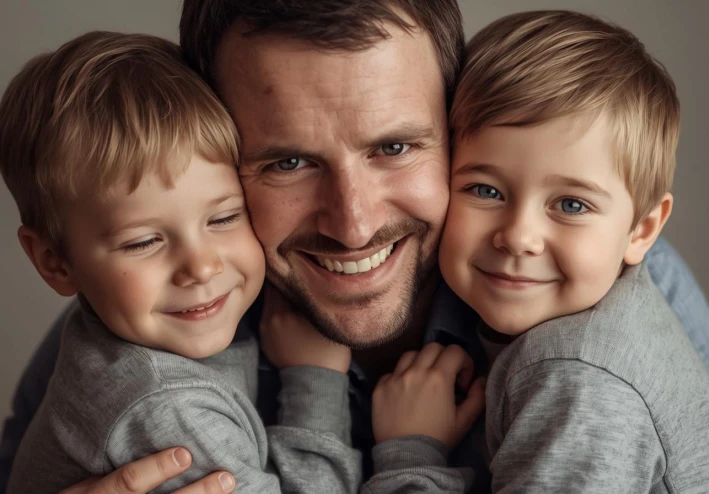
A child is like a memory card: you program it, and it carries out the instructions
The Child is a "Memory Card": You Program, They Execute
One day, I looked at my son as he imitated a small gesture of mine, and I smiled. But the smile quickly faded with a painful question: Is my mission as a parent to create a miniature version of myself? Is parenting simply the repetition of commands and the attempt to impose a path I never truly walked?
This is the silent crisis many parents fall into: we confuse love with possession. We love our children beyond measure, yet sometimes we exercise a kind of emotional ownership over them. We want them to succeed in the fields we once dreamed of, to avoid every mistake we once made, believing this is the safest way to secure their future. The result? Children who lack their own compass, and young adults torn between parental expectations and the inner voice that insists on freedom and choice.
Parenting is not a field of endless instructions; it is a construction workshop that requires unique tools and long patience. A child does not need a constant advisor as much as they need a present and attentive role model. True parenthood begins when you stop issuing orders and start sharing experiences and stories. When you sit down to listen to your child’s fears or unusual dreams without judgment, you are not merely giving them permission to speak, you are granting them space to exist and to feel safe.
Instead of obsessing over results and grades, invest in curiosity and the way your child thinks. Allow them to make mistakes in a safe environment. Failure discovered personally by the child carries more value than a hundred ready-made pieces of advice, because it becomes a personal experience engraved in memory.
Children also learn through reflection. Do not ask them to read while you spend all your time on your phone. Do not demand silence while you raise your voice. They do not follow words as much as they imitate actions. Be the change you want to see in them, because actions leave deeper marks than endless instructions.
When your child makes a mistake, start with empathy—“I understand you feel angry or frustrated”—before moving to correction. Building an emotional connection first makes guidance more acceptable. A child who feels understood is far more willing to listen and learn.
Children are not assets waiting for the future; they are unique beings being shaped today. Our role is not to force them into our old convictions, but to give them the space to discover their true identity. Successful parenting produces an individual capable of making decisions and embracing responsibility, not a machine that merely executes orders.
Parenting is not a short race but a lifelong journey filled with mistakes, learning, and growth. And the more freedom and trust we grant our children, the more prepared they become to face life with confidence, resilience, and creativity.